



















Now Reading: Extreme heat harms pregnant women, newborns, global survey finds
-
01
Extreme heat harms pregnant women, newborns, global survey finds

Extreme heat harms pregnant women, newborns, global survey finds


The Story in Brief
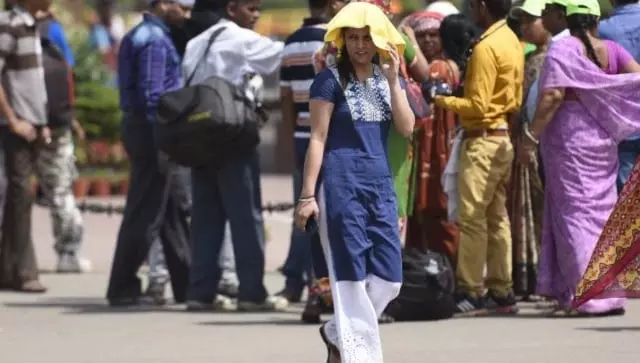
Extreme heat is harming pregnant women and newborns, with 73% of maternal healthcare professionals across five countries reporting a rise in heat-linked complications over the past five years, a Wellcome-commissioned survey of 1,000 professionals in India, Australia, Brazil, the UK and Zimbabwe found. Nearly all respondents said they had cared for a pregnant woman (98%) or a baby (99%) whose health they believed was affected by extreme heat.
UN Climate Change Executive Secretary Simon Stiell, speaking on Monday, 5 October at the Pre-COP ministerial meeting in Fiji, called pregnancy and birth a ‘new faultline’ in the climate crisis. He urged countries to include pregnancy and newborn care in adaptation plans and to deliver on adaptation finance. Wellcome is calling for the WHO to issue its first clinical guidance on heat and pregnancy ahead of COP31 in Antalya, Turkiye in November 2026.
Update, 7 October 2026: Indian Express and Down To Earth now also report the survey, confirming the 73% figure and Stiell’s warnings. Indian Express adds that India-specific research found working in high heat can double the risk of miscarriage and stillbirth. Down To Earth includes that 33 countries recorded their hottest July in 2026. Both outlets note Wellcome is calling for WHO clinical guidance on heat and pregnancy ahead of COP31.
Indian Opinion Analysis
The coverage is uniform straight reporting across all outlets, with no discernible slant: every source leads with the same survey finding, Stiell’s ‘faultline’ warning and Wellcome’s call for WHO guidance. Hindustan Times, The News Minute, NDTV, Business Today, Indian Express and Down To Earth each reproduce the identical headline fact and key figures, differing only in length or the inclusion of a table (Business Today) or India-specific research detail (Indian Express). The uniform framing suggests the story is treated as a public health data release rather than a political event. The key development to watch is whether COP31’s final text includes the maternal-health language Stiell and Wellcome are urging.
Coverage: 7 sources, 7 neutral
Sources (7): hindustantimes.com (neutral report), japantimes.co.jp (neutral report), thenewsminute.com (neutral report), ndtv.com (neutral report), businesstoday.in (neutral report), indianexpress.com (neutral report), downtoearth.org.in (neutral report)
This brief was synthesised by AI from the 7 sources linked above, so one read covers every framing they carry. Methodology and corrections.