











Now Reading: Goa archaeology directorate acquires 17th-century folk deity sculpture
-
01
Goa archaeology directorate acquires 17th-century folk deity sculpture


The Story in Brief
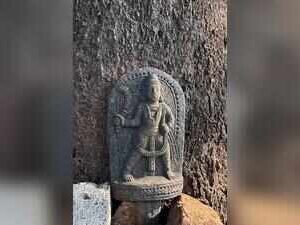
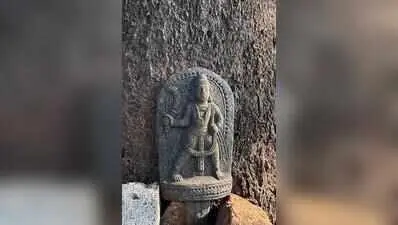
The Goa directorate of archaeology has acquired an intricately carved folk deity sculpture from Honda in Sattari, believed to date from the 17th-18th century. The schist stone figure depicts a standing male deity or possibly a guardian figure, holding a sword in one hand with the other on its waist. Additional director Balaji Shenoy said the piece features a decorated mukuta, kundala earrings and an ornamented prabhavali.
The department believes the sculpture may originally have been mounted on a pitha, but its precise provenance and original religious setting remain unknown as it was not found at an existing religious site. Shenoy said the acquisition, led by exploration officer Deepika Gaonkar, aims to document and investigate the object. The piece offers material for studying Goa’s lesser-documented folk religious traditions and stone sculptural practices.
Indian Opinion Analysis
Both outlets report the same facts identically, including the acquisition by the Directorate of Archaeology, the 17th-18th century dating, the schist stone material, the iconographic elements and the absence of a known original site. The coverage is uniform wire-style reporting, neither source leads with a distinct slant, omits a significant detail the other carries, or frames the acquisition as a heritage rescue or a routine handover. The shared emphasis on the unknown provenance and the department’s stated purpose of documentation leaves the next step open: the sculpture’s interpretation depends entirely on the Directorate’s forthcoming examination of its form, iconography and material properties.
Coverage: 2 sources, 2 neutral
Sources (2): timesofindia.indiatimes.com (neutral report), urbanacres.in (neutral report)
This brief was synthesised by AI from the 2 sources linked above, so one read covers every framing they carry. Methodology and corrections.