














Now Reading: MeitY clears Rs 7,877 crore ECMS tranche for electronics components
-
01
MeitY clears Rs 7,877 crore ECMS tranche for electronics components



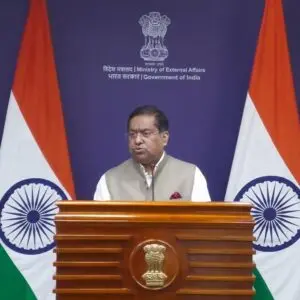
The Ministry of Electronics and Information Technology has cleared 31 applications involving an investment of Rs 7,877 crore under the fifth tranche of the Electronics Component Manufacturing Scheme. The approvals are expected to generate production worth Rs 82,243 crore and provide employment to nearly 10,000 people, MeitY Secretary S Krishnan said. Companies including Kaynes Technology, Wipro Global, Dixon Technologies, Motherson Group and Jyoti CNC have received approval for plants making printed circuit boards, camera modules, copper-clad laminates and capital goods.

Union Minister Ashwini Vaishnaw said the 106 projects approved so far under ECMS will directly employ about 75,000 people and create 2.5 lakh jobs once mass production begins. "In components, we have been able to achieve diversity, such as through filters, coils, speakers, metal shielding covers, electrolyte additives, acetylene black, hermetic materials, CNC metal cutting machines, testing equipment, capacitors, and permanent magnets," Vaishnaw said.
The Kaynes Circuits PCB plant near Chennai is expected to become operational within a month, while Dixon's Noida facility for display and camera modules should start in about four months. Wipro Global's copper-clad laminate plant and Motherson's enclosure plant in Kanchipuram are likely to begin operations in two to three months. The government has already exceeded the ECMS investment target of Rs 59,350 crore, with total commitments now at Rs 69,548 crore, and the production target of Rs 4.56 lakh crore has been surpassed at Rs 5.34 lakh crore.
Sources (4): ndtvprofit.com, telecom.economictimes.indiatimes.com, telecom.economictimes.indiatimes.com (2), telecom.economictimes.indiatimes.com (3)
This story was synthesised by AI from the 4 sources linked above. Methodology and corrections.
Updated: this story now draws on 4 sources.