





















Now Reading: Hyderabad scientists identify protein linked to adult nerve repair
-
01
Hyderabad scientists identify protein linked to adult nerve repair

Hyderabad scientists identify protein linked to adult nerve repair

The Story in Brief
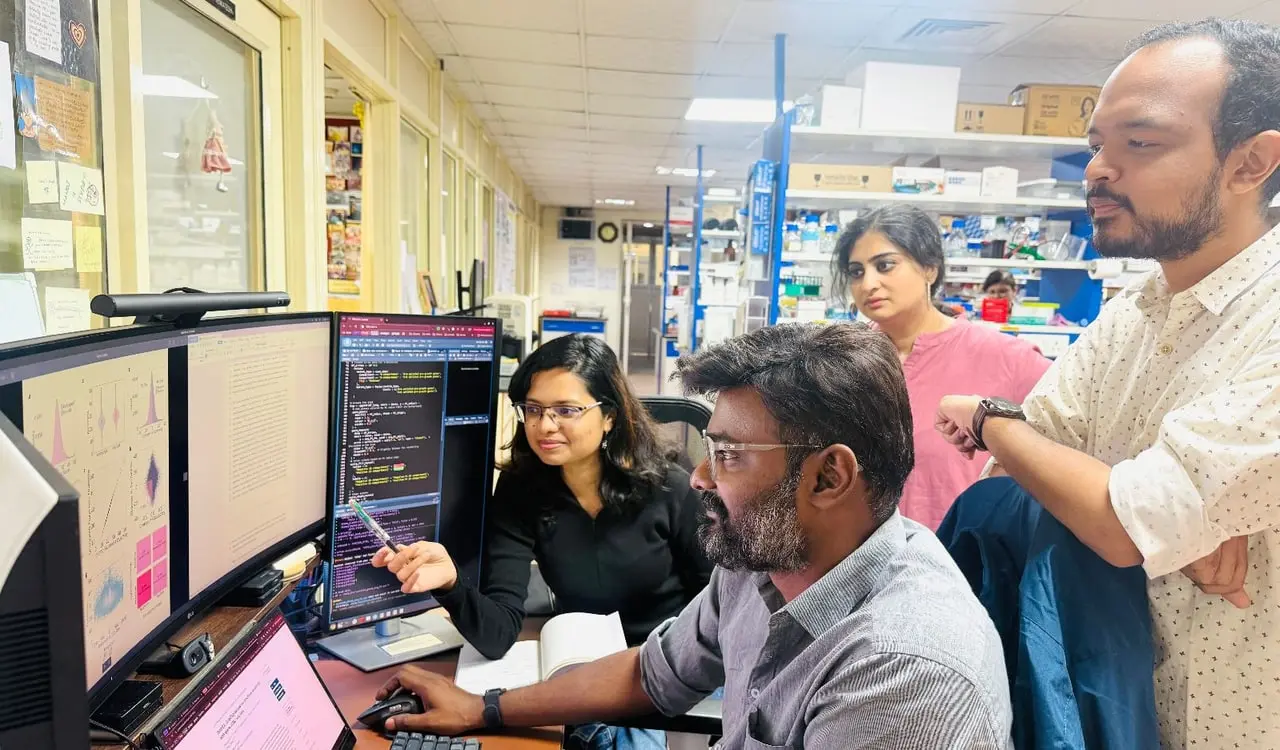
Scientists at Hyderabad’s Centre for Cellular and Molecular Biology (CCMB) found that the protein PATZ1 helps make dormant nerve-repair genes accessible in adult mice, a finding that could inform future treatments for brain and spinal cord injuries. The study, published in Communications Biology, examined spinal cord nerve cells and was led by Ishwariya Venkatesh.
The researchers found that PATZ1 removes nucleosomes, protein structures around which DNA is wrapped, from regions containing genes linked to nerve regeneration. The genes remain in adult neurons but become difficult to activate as they are tightly packed. PATZ1 is plentiful in young neurons and declines as they mature. The Hindu also reports that the protein plays a role in injured corticospinal neurons, which control voluntary movement.
The researchers cautioned that PATZ1 alone cannot trigger nerve regrowth. They said it would need to be combined with other growth-promoting factors for effective regeneration.
Indian Opinion Analysis
Telangana Today and The Hindu offer uniform, straight reporting, with neither framing the finding as a treatment already available. The Hindu adds specificity about corticospinal neurons and voluntary movement, while both retain the researchers’ caution about the protein’s limits. That qualification keeps the potential application distinct from a demonstrated therapy for people with paralysis. The researchers say PATZ1 would need to be combined with other growth-promoting factors.
Coverage: 2 sources, 2 neutral
Sources (2): telanganatoday.com (neutral report), thehindu.com (neutral report)
This brief was synthesised by AI from the 2 sources linked above, so one read covers every framing they carry. Methodology and corrections.