













Now Reading: India adds 405 defence items to indigenisation list
-
01
India adds 405 defence items to indigenisation list


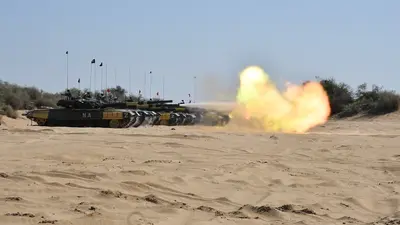
The Department of Defence Production (DDP) has notified the sixth Positive Indigenisation List, adding 405 defence items that must now be manufactured in India instead of being imported. The list covers line replaceable units, sub-systems, spares, and raw materials for platforms including the Su-30MKI fighter jet, AL-31FP engine, Advanced Light Helicopter, T-72 and T-90 tanks, and BMP-II armoured vehicles, along with missile systems such as Konkurs-M and MRSAM and defence electronics.
Each item comes with an indicative timeline for indigenisation, after which it will be sourced from Indian industry. The list is estimated to generate Rs 3,070 crore in business for domestic manufacturers. Defence PSUs will lead the effort through their Make procedure and in-house development, with MSMEs expected to play a significant role. The DDP's SRIJAN Defence Portal has now offered over 33,000 items for indigenisation since its launch in August 2020.
The Times of India reports that over 15,700 defence items have already been indigenised, leading to an estimated import substitution of Rs 9,000 crore over five years. Mathrubhumi adds that defence production reached a record Rs 1.78 lakh crore in 2025-26, while exports rose to Rs 38,424 crore, with the government targeting Rs 3 lakh crore in production and Rs 50,000 crore in exports by 2029.
Indian Opinion Analysis
The sixth positive indigenisation list adds 405 defence items, from T-90 tank spares to AL-31FP engine parts, with an estimated business potential of Rs 3,070 crore for Indian manufacturers. The Department of Defence Production (DDP) notified the list, which includes items for air, armoured, and missile platforms, as well as electronics and ammunition, with timelines for each item to be sourced domestically. The Times of India frames this as a concrete step in the Aatmanirbhar Bharat push, noting over 15,700 items already indigenised and import substitution of Rs 9,000 crore. Mathrubhumi places it in a broader transformation, citing defence production reaching Rs 1.78 lakh crore in 2025-26 and exports soaring to Rs 38,424 crore from Rs 686 crore a decade ago, with a target of Rs 3 lakh crore production and Rs 50,000 crore exports by 2029. Both sources agree on the direction, though Mathrubhumi emphasises the role of private firms and start-ups, while Times of India focuses on DPSUs and MSMEs. The success will hinge on MSMEs scaling capabilities within the indicated timelines.
Sources (2): timesofindia.indiatimes.com, english.mathrubhumi.com
This story was synthesised by AI from the 2 sources linked above. Methodology and corrections.
Updated: this story now draws on 2 sources.