






















Now Reading: India-UK team develops magnetic nanorobots to steer synthetic cells
-
01
India-UK team develops magnetic nanorobots to steer synthetic cells


The Story in Brief
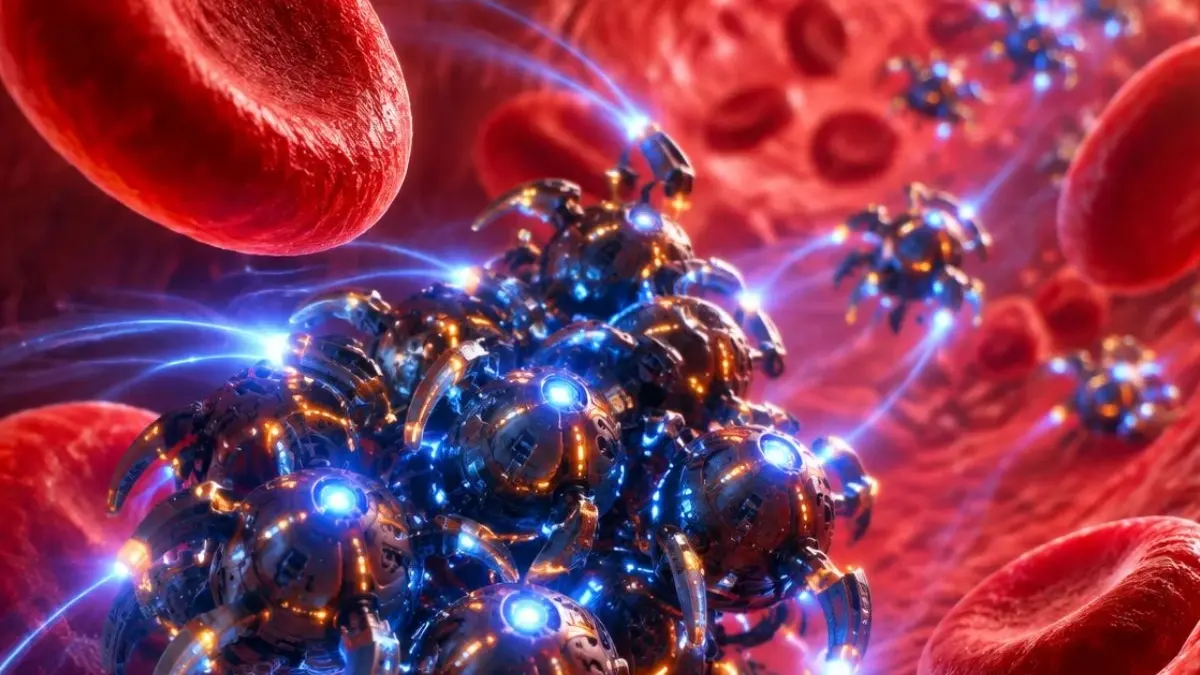
Imperial College London and the Indian Institute of Science in Bengaluru are developing magnetic nanorobots that could steer synthetic cells through the body and other complex environments. The project combines synthetic biology with nanorobotics to create microscopic systems that can move, carry materials and potentially deliver them to precise locations.

The researchers aim to place magnetic nanomotors inside polymer-based vesicles, allowing external magnetic fields to guide the cell-like structures. The technology could support targeted medicine, biosensing and environmental monitoring, and may help reduce drug doses and side effects. Supported by Imperial’s India Connect Fund, the collaboration is intended to build a long-term platform for research, training and knowledge exchange between India and the UK.
Indian Opinion Analysis
Both rediff.com and Mathrubhumi carry the same straight reporting, with no clear difference in framing. Their coverage presents the project as an early research effort rather than a completed medical technology, while outlining possible uses in targeted medicine, biosensing and environmental monitoring. The reports include claims from Claudia Contini and Ambarish Ghosh about synthetic cells, magnetic movement and work in biological environments, but do not provide a timeline for testing or deployment. The project’s stated next steps are to build hybrid systems and establish a longer-term research platform supported by Imperial’s India Connect Fund.
Coverage: 2 sources, 2 neutral
Sources (2): rediff.com (neutral report), mathrubhumi.com (neutral report)
This brief was synthesised by AI from the 2 sources linked above, so one read covers every framing they carry. Methodology and corrections.