











Now Reading: Indian art market turnover triples, global sales slump
-
01
Indian art market turnover triples, global sales slump


The Story in Brief
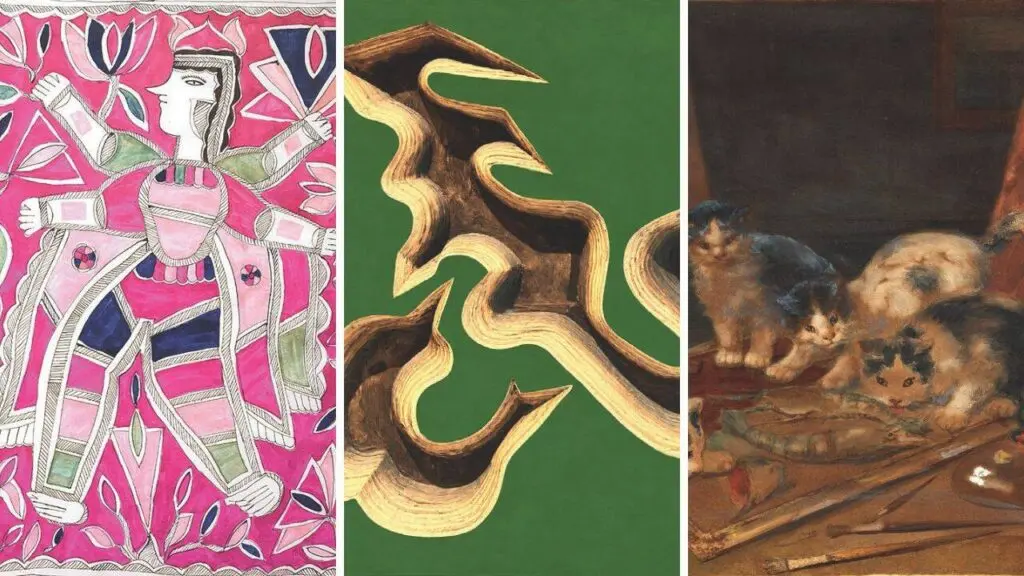
The Indian secondary art market reported a turnover of Rs 2,500 to 2,660 crore in 2025, more than tripling from Rs 792 crore in 2015, according to The Economic Times and Business Today. While global auction sales at Christie’s, Sotheby’s, and Phillips have been slow to recover from a four-year slump, and Asian markets in China, Japan, and Korea have fallen sharply, India has emerged as an outlier.
Raja Ravi Varma’s ‘Yashoda and Krishna’ sold for Rs 167 crore in April 2026, the highest value for a painting by a South Asian artist, bought by billionaire Cyrus Poonawalla. Tyeb Mehta’s ‘The Rickshaw Puller’ fetched Rs 69 crore in October 2026. Sotheby’s South Asian art sales grew by over 240% since 2022, rising from $14.1 million to $48.2 million in 2026 through September.
Gallerists and collectors say the growth is driven by growing wealth, a sophisticated collector base, and greater international recognition. Saffronart recorded Rs 301 crore from its Spring 2026 sales, up from Rs 245 crore in 2025. The market is projected to reach Rs 7,500 to 8,000 crore by 2030, according to Artery India.
Indian Opinion Analysis
Both outlets present the same bullish data on India’s art market surge, but The Economic Times leads with global market slump and the structural under-penetration of Indian art (0.01% of GDP vs 0.8% in the US), framing the story as an asset-class opportunity for new billionaires. Business Today leads with the Raja Ravi Varma record sale, emphasising cultural legacy and a new generation of collectors, while also noting the need for lasting market infrastructure. Neither is critical, both are neutral-report in tone. The combined coverage suggests the art market is in a growth phase supported by domestic wealth, but the differing emphases, one on investment scarcity, the other on cultural prestige, point to a market still defining its narrative. Both agree on the key figure: turnover tripled to around Rs 2,500 crore in 2025.
The next concrete question, left open by both, is whether the projected 20 to 25% annual growth to Rs 7,500 to 8,000 crore by 2030 will materialise.
Coverage: 2 sources, 2 neutral
Sources (2): economictimes.indiatimes.com (neutral report), businesstoday.in (neutral report)
This brief was synthesised by AI from the 2 sources linked above, so one read covers every framing they carry. Methodology and corrections.