



















Now Reading: Indian scientists prove quantum measure can exceed one
-
01
Indian scientists prove quantum measure can exceed one


The Story in Brief
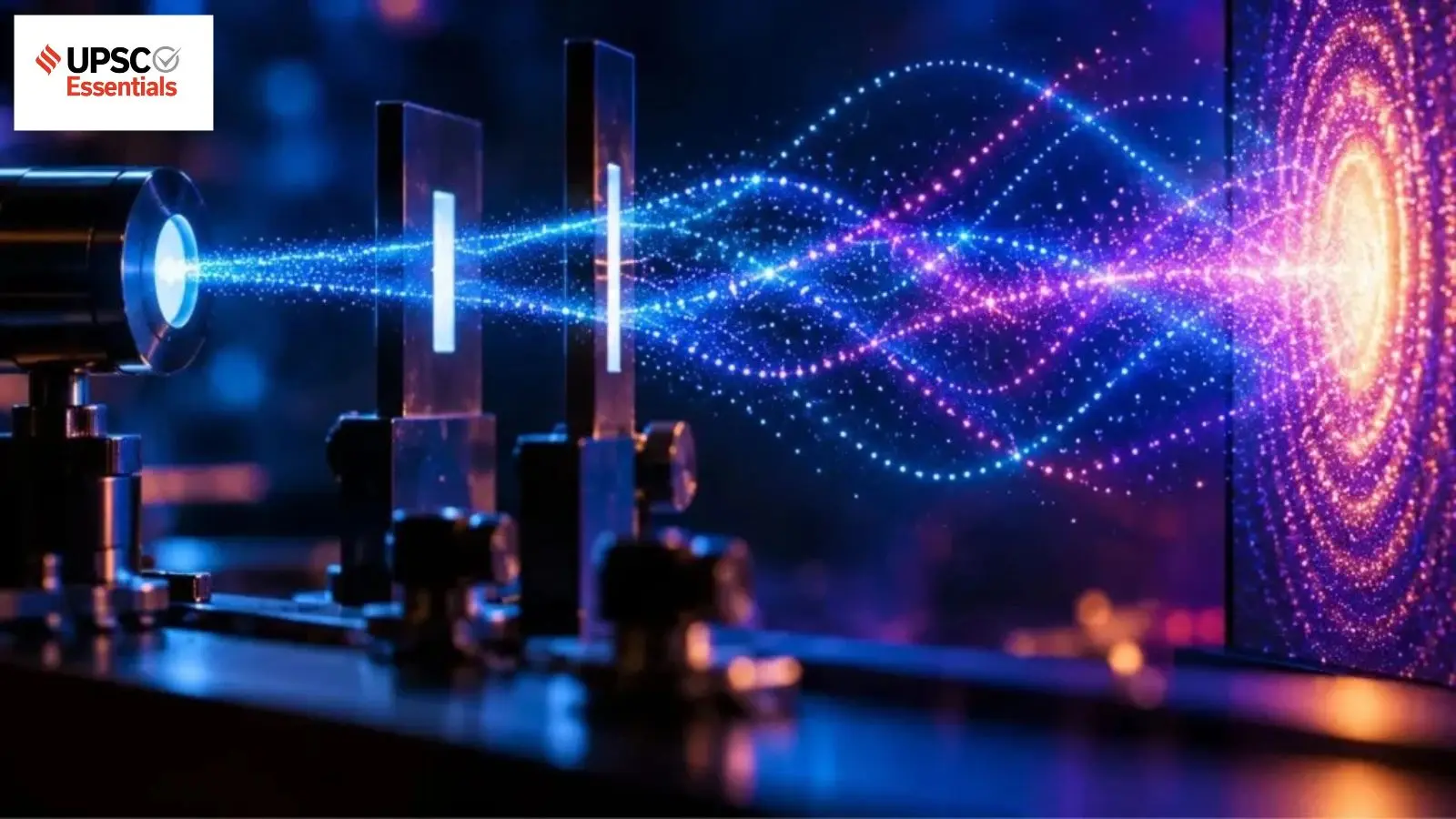
Indian scientists at the Raman Research Institute (RRI) in Bengaluru have experimentally demonstrated, for the first time, that a quantity called ‘quantum measure’ can exceed one. The work, by Sanchari Chakraborti under the supervision of Urbasi Sinha, was published in the journal Quantum in September 2026. The team measured a quantum measure of 1.17, closely matching the theoretical calculation of 1.18.
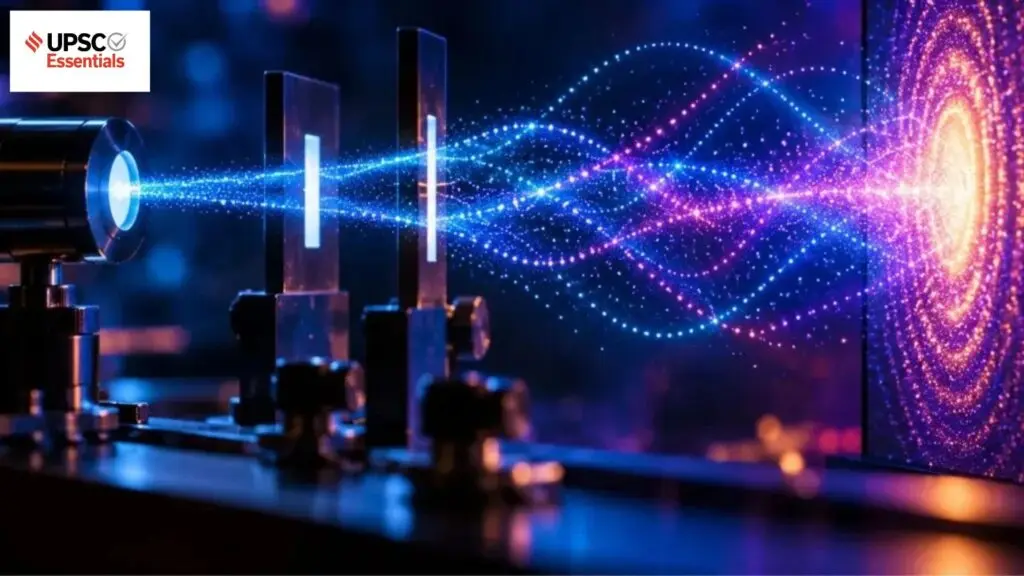
Quantum measure is a generalisation of classical probability that accounts for quantum interference effects. Unlike ordinary probability, which cannot exceed one, the quantum measure can exceed one because multiple pathways a quantum particle can take can interfere with each other like waves, creating a larger combined effect. The experiment verifies a long-understood theoretical concept.
The findings are relevant to UPSC Prelims 2027 Science and Technology syllabus, particularly quantum mechanics and the foundations of quantum computing. The quiz also covered the JAXA-led Martian Moons Exploration (MMx) mission, which aims to study the origin of Phobos and Deimos.
Indian Opinion Analysis
The first experimental proof that quantum measure can exceed one confirms a theoretical prediction long accepted by physicists. For candidates preparing for UPSC Prelims 2027, this serves as a concrete example of how quantum mechanics defies classical intuition. The experiment also highlights a methodological advance: the RRI team built a novel set-up to observe interference among multiple pathways. The source leaves unresolved how this finding might accelerate quantum computing or sensing applications. The next step lies in further experimental work by the same or other groups to test the limits of the phenomenon.
Source: indianexpress.com
This brief was synthesised by AI from the source linked above. Methodology and corrections.