
















Now Reading: Jean Purdy, key IVF pioneer, finally gets her due
-
01
Jean Purdy, key IVF pioneer, finally gets her due


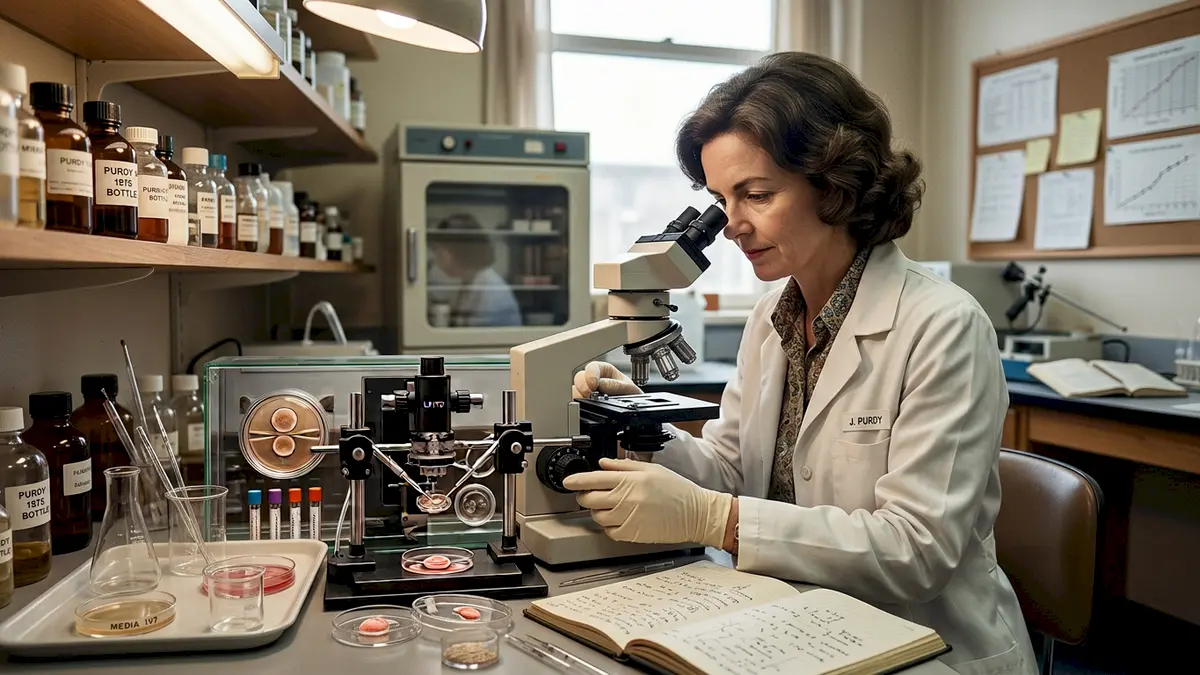
The Hindu reports that Jean Purdy, a clinical embryologist who was critical to the first successful in vitro fertilisation procedure that led to Louise Brown's birth in 1978, is finally receiving recognition after decades of being overlooked. Purdy worked alongside physiologist Robert Edwards and gynaecologist Patrick Steptoe, but her contributions were long minimised by the Matilda Effect, a form of sexism in science. She managed the lab, prepared culture media, was the first to see the human blastocyst, and co-authored 26 papers.
Purdy died of cancer in 1985 at age 39, but not before helping establish the world's first dedicated IVF clinic, Bourn Hall, where she oversaw 500+ IVF births. Analysis of her laboratory notebooks by researchers Martin H. Johnson and Kay Elder concluded that without her systematic contributions, the project 'may have faltered'. Despite Edwards' protests, Purdy's name was omitted from a commemorative plaque at Oldham Hospitals, and only Edwards received the Nobel Prize. Recognition is now growing, with awards and exhibitions named after her.
Source: thehindu.com
This story was synthesised by AI from the source linked above. Methodology and corrections.