











Now Reading: Kolkata-Sairang Express derailment: brake failure, safety checks ordered
-
01
Kolkata-Sairang Express derailment: brake failure, safety checks ordered

Kolkata-Sairang Express derailment: brake failure, safety checks ordered

The Story in Brief
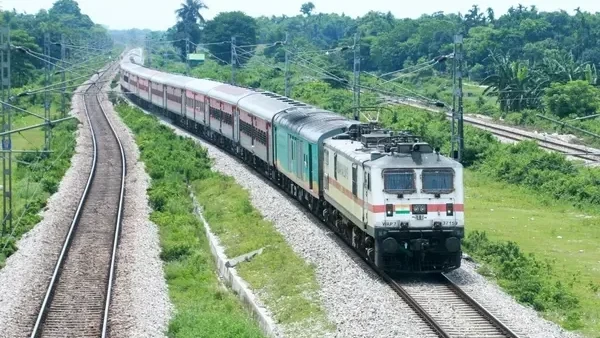
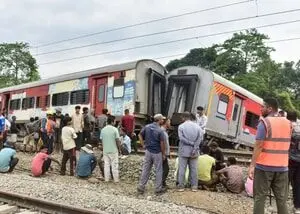
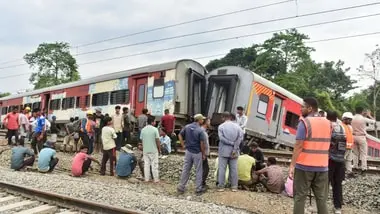
A preliminary probe into the derailment of the Kolkata-Sairang Express near Guwahati on 11 November has found that the main braking system may have been dysfunctional. The Railway Board has ordered all zonal railways to conduct a safety drive from 12 to 18 November to check brake feel and brake power tests, with discrepancies to be reported by 20 November.
The six-member probe team found that the brake pipe angle cock, which applies brakes in coaches, was in an isolated condition in the locomotive. Livemint reports that a possible communication gap between station staff and the train crew may have caused the isolation, while The Indian Express notes that the train overshot a red signal at Digaru station and derailed after the loco pilot tried all available brakes but none worked.
The Railway Board has directed that running crews must conduct mandatory braking tests after taking charge of a train. The probe has not yet established who rendered the braking system dysfunctional or whether the crew failed to follow safety procedures.
Indian Opinion Analysis
Both Livemint and The Indian Express report the same core finding, a closed brake pipe angle cock, and the Railway Board's safety drive, making the coverage largely uniform. Livemint leads with the communication-gap theory and the possibility that the crew missed braking tests, while The Indian Express provides a detailed sequence of the train's 33-km journey, including the failed emergency and regenerative brake attempts. Neither outlet adopts a critical stance toward the government or the railways, both present the Railway Board's directive as the central corrective step. The balanced reading is that the cause is still unassigned, the probe has not named who isolated the angle cock, and the board's deadline for reporting discrepancies is 20 November.
Coverage: 2 sources, 2 neutral
Sources (2): livemint.com (neutral report), indianexpress.com (neutral report)
This brief was synthesised by AI from the 2 sources linked above, so one read covers every framing they carry. Methodology and corrections.