



















Now Reading: Ladakh starts pilot saffron cultivation on reclaimed Leh land
-
01
Ladakh starts pilot saffron cultivation on reclaimed Leh land


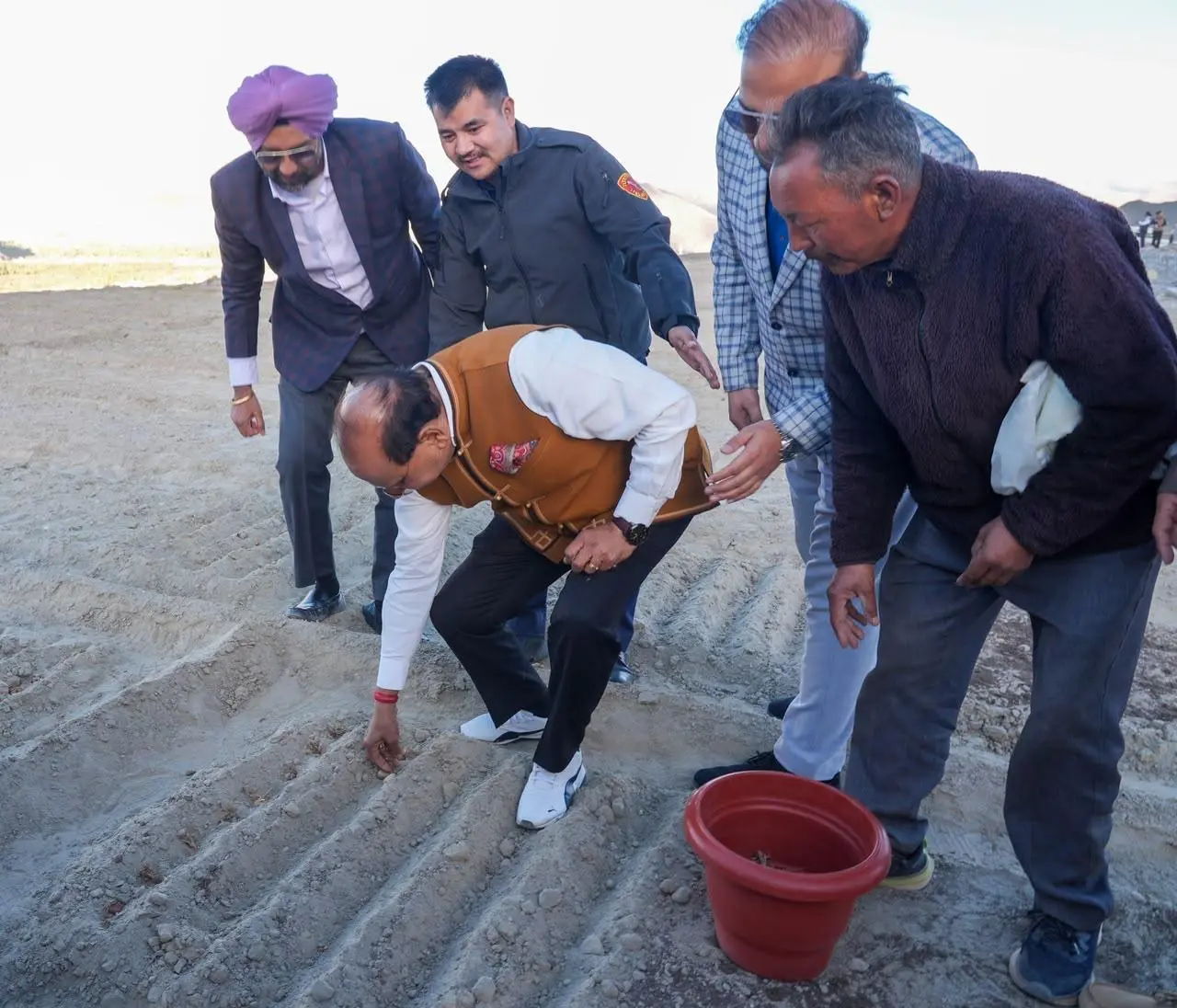
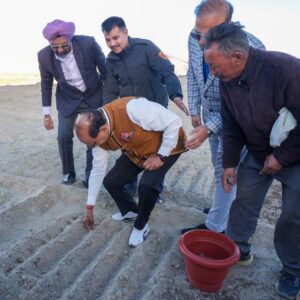
Ladakh has begun a pilot project to cultivate saffron on nearly 4,000 square metres of reclaimed land at Spituk Pharka in Leh, planting around 90,000 premium Iranian corms weighing about 800 kg. The land was barren until recently and has been restored using water from the Igoo-Phey irrigation canal, which was revived under Project Him Sarovar.
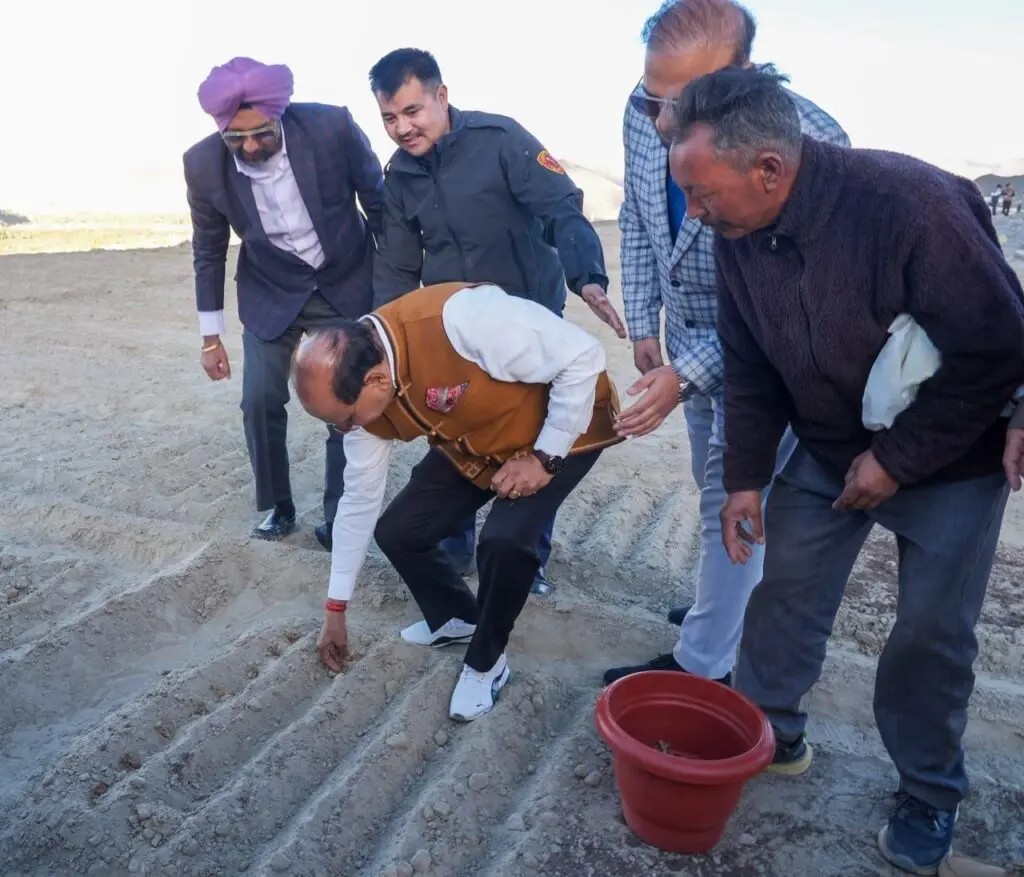
The Ladakh Administration said the experiment aims to assess saffron’s viability under high-altitude conditions and is part of a broader effort to convert 800 acres of degraded land into productive assets. Lieutenant Governor Vinai Kumar Saxena said the initiative could provide a new high-value crop for farmers and boost the local economy. Both outlets report that Jammu and Kashmir accounts for about 90 per cent of India’s saffron production. The yield will be evaluated after cultivation.
Indian Opinion Analysis
Both outlets present near-identical straight news coverage of the pilot saffron plantation in Ladakh, attributing facts to the Administration and quoting LG Saxena. Kashmir Life frames the initiative as an agricultural experiment on reclaimed land, emphasising the technical specifications of the corms and the land-restoration effort. The New Indian Express leads with the crop’s ‘red gold’ tag and adds an explicit reference to Prime Minister Modi’s vision of diversifying agriculture, a detail absent from the other account. Neither outlet carries any critical or opposition view. The coverage is uniform in substance, with the only difference being a single government-aligned framing in one source. The next step will be the post-cultivation yield assessment.
Coverage: 2 sources, 1 pro-government, 1 neutral
Sources (2): kashmirlife.net (neutral report), newindianexpress.com (pro government)
This brief was synthesised by AI from the 2 sources linked above, so one read covers every framing they carry. Methodology and corrections.