














Now Reading: Maharashtra offers Rs 500 to tribal families for malaria testing
-
01
Maharashtra offers Rs 500 to tribal families for malaria testing


The Maharashtra government has launched a cash-incentive scheme in Gadchiroli, the state's worst-affected rural district for malaria, to encourage tribal communities to get tested and treated. A tribal family will receive Rs 500 if a family member with fever approaches the health system and tests positive for malaria. A traditional healer, or vaidu, who refers a patient who subsequently tests positive will get Rs 200.
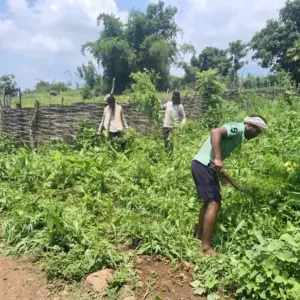
Gadchiroli, about 70% of which is dense forest, contributes 33% of Maharashtra's malaria cases despite having only 1% of the state's population. Between January 1 and August 15 this year, 3,004 malaria cases were reported from the district, with 1,680 in July alone. Dr Abhay Bang, head of the state-appointed Malaria Control Task Force, said this is the first time such an incentive has been provided for malaria in India and is modelled on the community-involvement strategy used to fight smallpox in the 1970s.
The scheme, detailed in a June 24 order from the Gadchiroli Zilla Parishad health department, also includes awareness campaigns, weekly IEC activities in tribal schools, and health booths at weekly bazaars. District Health Officer Dr Pratap Shinde said the focus is on driving behavioural change among tribals so they seek early treatment.
Indian Opinion Analysis
Gadchiroli's malaria burden is a classic case of a neglected tropical disease persisting where conflict, geography and poverty overlap. The district was affected by Maoist insurgency for decades, which weakened the public health infrastructure. Forest malaria is harder to control because Anopheles mosquitoes breed in tree holes and streams, not just stagnant water, making conventional spraying less effective. The incentive model borrows from India's successful smallpox eradication campaign, which used cash rewards for case notification. The key question is whether a one-time payment of Rs 500 is enough to overcome deep-seated mistrust of government health workers in a region where traditional healers are the first point of contact. Watch for whether case detection rates rise significantly in the next reporting period, especially after the monsoon peak when transmission is highest.
Source: thehindu.com
This story was synthesised by AI from the source linked above. Methodology and corrections.