

















Now Reading: Mauritius minister says India still attractive for global investment
-
01
Mauritius minister says India still attractive for global investment


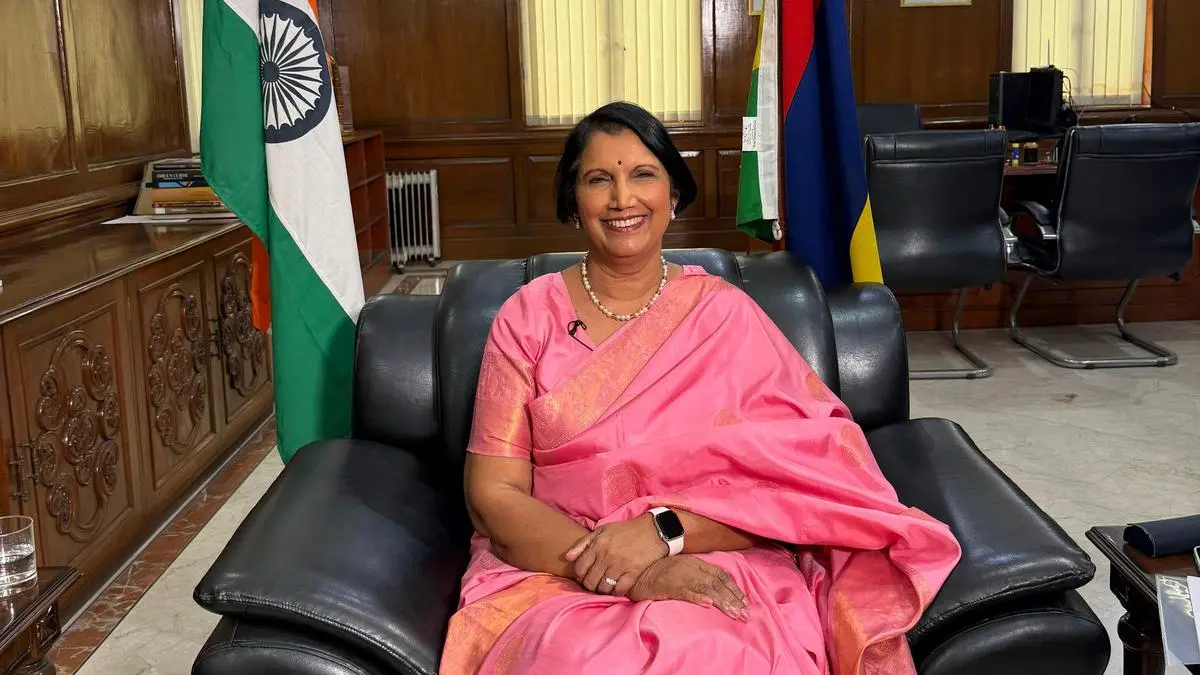
India remains a very attractive destination for global investments, Mauritius Financial Services Minister Jyoti Jeetun told The Hindu. She said the amended Double Taxation Avoidance Agreement (DTAA) between the two countries, recently ratified by the Mauritian Cabinet, will ensure genuine investments flow from Mauritius to India. Jeetun added that investor concerns over the amendments have been resolved after 18 months of engagement with Indian authorities. The amendment, which introduces a Principal Purpose Test to prevent treaty misuse, still needs to be notified by both sides to take effect.
Mauritius has historically been a major source of foreign direct investment (FDI) into India, accounting for about $6.6 billion (11.2% of total FDI) in 2025-26, the second-highest after Singapore, per DPIIT data. Separately, ET Government reported that new rules easing FDI for overseas companies with up to 10% Chinese shareholding have yielded 29 proposals totaling nearly Rs 4,895 crore. These span sectors like IT, manufacturing and pharmaceuticals, and come from investors in Mauritius, the US and Singapore, among others.
The relaxed rules, notified under FEMA on May 1, 2026, allow such entities to invest under the automatic route, removing prior government approval requirements. However, the rules do not apply to entities registered in China, Hong Kong, or other land-border countries like Pakistan and Bangladesh.
Indian Opinion Analysis
The Hindu gives a platform to a Mauritian minister to reassure investors about the amended DTAA, framing the story around confidence and cooperation without any critical counterpoint. ET Government reports on the positive results of relaxed FDI rules for Chinese-linked entities, adopting a pro-business, government-friendly tone that highlights economic gains. Neither source mentions potential risks or criticisms of these policies. A careful reader should note that The Hindu's piece is essentially a promotional interview, while ET Government's report relies solely on an unnamed official. The real story to watch is whether these two policy tracks together signal a broader opening to Chinese capital via third countries.
Coverage: 2 sources, 1 pro-government, 1 neutral
Sources (2): thehindu.com (neutral report), government.economictimes.indiatimes.com (pro government)
This story was synthesised by AI from the 2 sources linked above. Methodology and corrections.
Updated: this story now draws on 2 sources.