










Now Reading: Memory chip crunch raises costs for Indian AI startups
-
01
Memory chip crunch raises costs for Indian AI startups


The Story in Brief
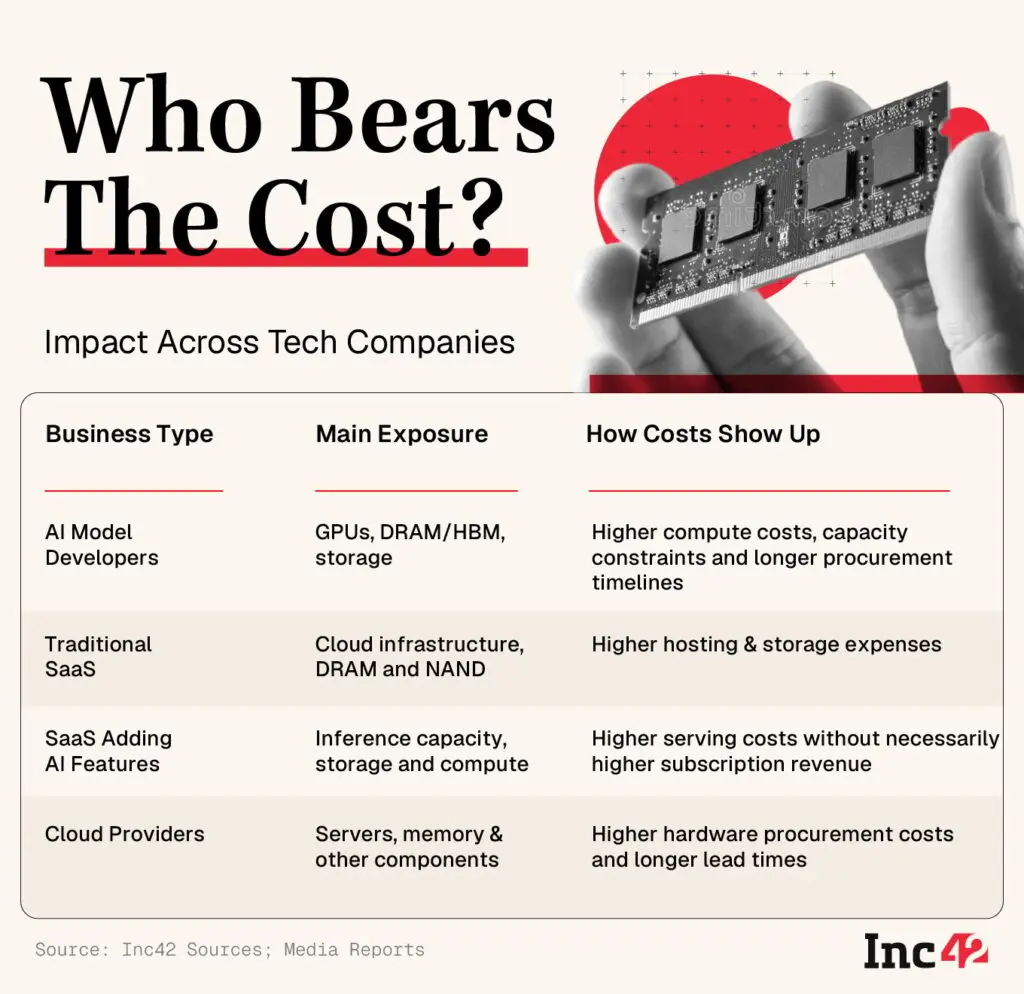
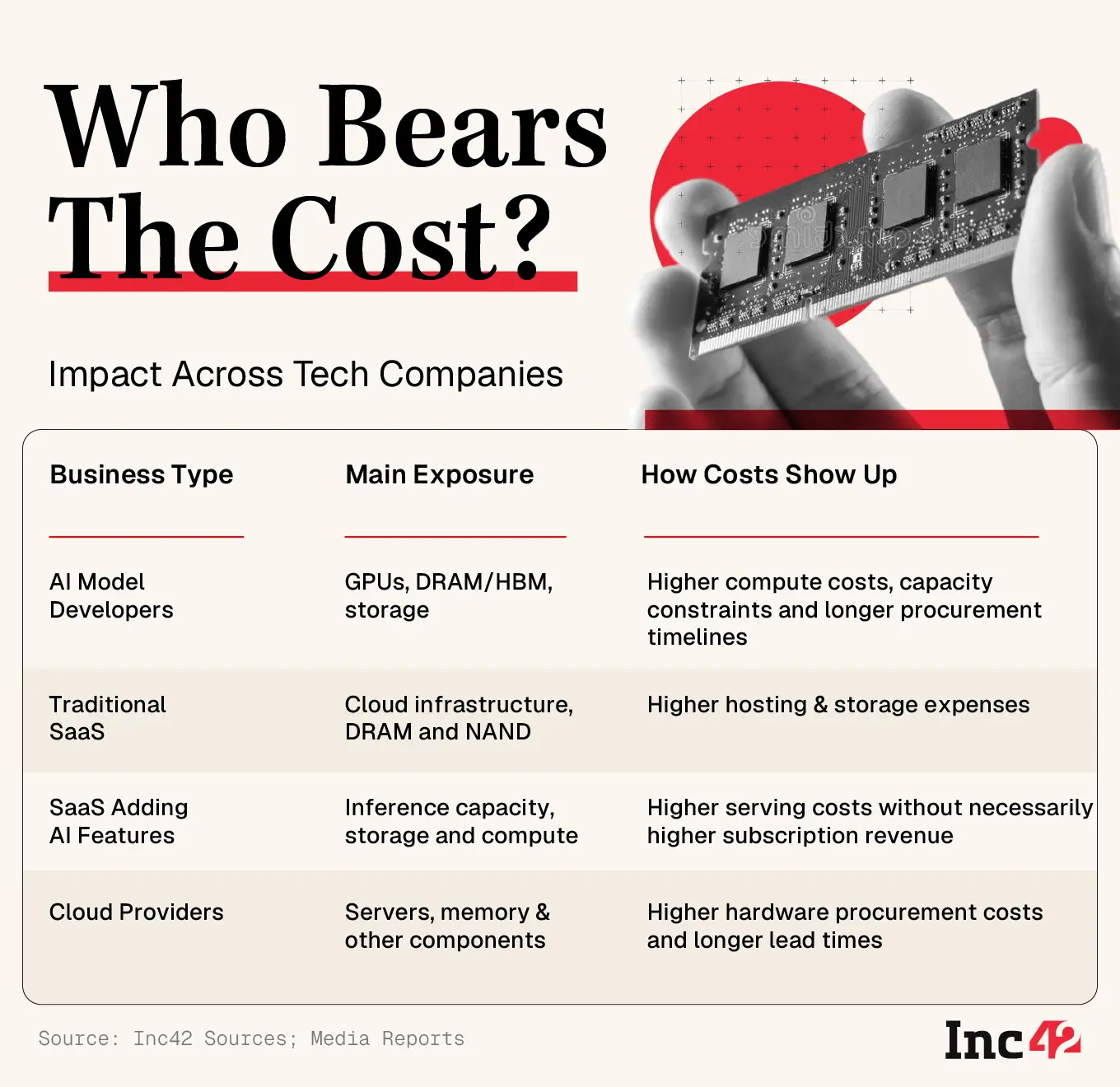
Rising memory chip costs and scarce GPU capacity are increasing computing expenses for Indian AI startups, Inc42 reports. GPU prices have risen 30 to 35% since February 2026, according to Subhashish Banerjee, co-founder of Bharat1 AI. Startups that once booked capacity for hours may now be asked to commit for three or six months, before customer demand is certain. Juspay is awaiting a larger 72-GPU rack, with delivery commitments stretching three to six months, its co-founder and COO Sheetal Lalwani said.
Hindustan Times reports that a global memory-chip shortage, driven by data centre demand for AI, has also pushed up electronics prices. Some memory chips have become 10 times more expensive in the 12 months before 26 November 2026, and the shortage is expected to last at least until new factories come online in 2028. Inc42 says higher cloud infrastructure costs are also affecting SaaS companies as they add AI features. For Indian firms, compute bought in dollars adds exposure to currency fluctuations.
Indian Opinion Analysis
Inc42 centres the cost squeeze on Indian companies’ access to compute, including GPU prices, allocation and dollar-denominated purchases. Hindustan Times gives the shortage a global supply-chain frame, led by procurement competition and rising electronics prices. These are different emphases rather than conflicting accounts: one shows how constrained capacity affects startup planning, while the other describes pressure across chip buyers and consumer products. Neither account establishes how much costs will ultimately rise for Indian startups or SaaS firms. Juspay’s larger 72-GPU rack remains pending, with delivery commitments stretching three to six months.
Coverage: 2 sources, 1 neutral, 1 sensationalist
Sources (2): inc42.com (neutral report), hindustantimes.com (sensationalist)
This brief was synthesised by AI from the 2 sources linked above, so one read covers every framing they carry. Methodology and corrections.