














Now Reading: PM calls on space startups to make India a global talent magnet
-
01
PM calls on space startups to make India a global talent magnet



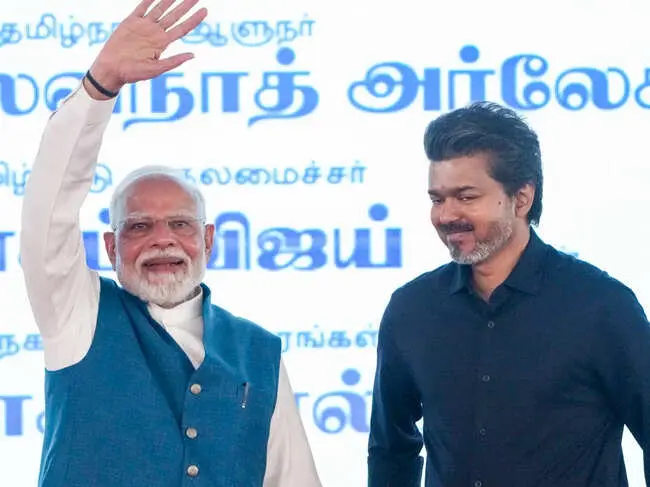
Prime Minister Narendra Modi on August 23 urged 20 Indian space startups to build an ecosystem that attracts global talent and investment. Speaking on National Space Day, marking the second anniversary of Chandrayaan-3's Moon landing, he said India should create an "aura" that makes it a destination for careers in the sector. He highlighted cost competitiveness and urged startups to work with agriculture and dairy sectors.

Separately, ISRO chief V. Narayanan told the US-India Space Business Forum in Bengaluru on February 10 that India's space programme was built for cooperation, not competition. He recalled that the US and France helped launch India's first rocket in 1963 and praised joint missions including Chandrayaan-1 and NISAR. He confirmed India will build a five-module space station, with the first module launching by 2028.
Indian Opinion Analysis
The coverage from both sources published on the same outlet, The Hindu, frames Indian space efforts differently by subject and occasion. The PM's National Space Day interaction emphasises commercial ambition and startup-led growth, casting India as a talent magnet for global space business. The ISRO chief's forum address, recorded months earlier, foregrounds international partnership and societal benefit, explicitly stating the programme was not launched for competition. The PM's call omits any discussion of collaboration with the US or others, while the ISRO chief's framing downplays commercial rivalry. Together the two pieces show the government simultaneously projecting the private sector as a competitive global hub and its state agency as a cooperative developer. The contrasting emphases suggest a deliberate split between commercial and diplomatic communication tracks. The practical pivot comes in 2028, when ISRO's first space station module is scheduled for launch.
Coverage: 2 sources, 2 pro-government
Sources (2): news.google.com (pro government), thehindu.com (pro government)
This brief was synthesised by AI from the 2 sources linked above, so one read covers every framing they carry. Methodology and corrections.
Updated: this story now draws on 2 sources.