












Now Reading: Ex-ISRO scientist lists maths, coding, AI skills for space careers
-
01
Ex-ISRO scientist lists maths, coding, AI skills for space careers



Gurpreet Singh, a former ISRO scientist and IIT Roorkee graduate who spent over seven years on India's NavIC navigation system, said students should build a strong foundation in mathematics, physics, and programming…
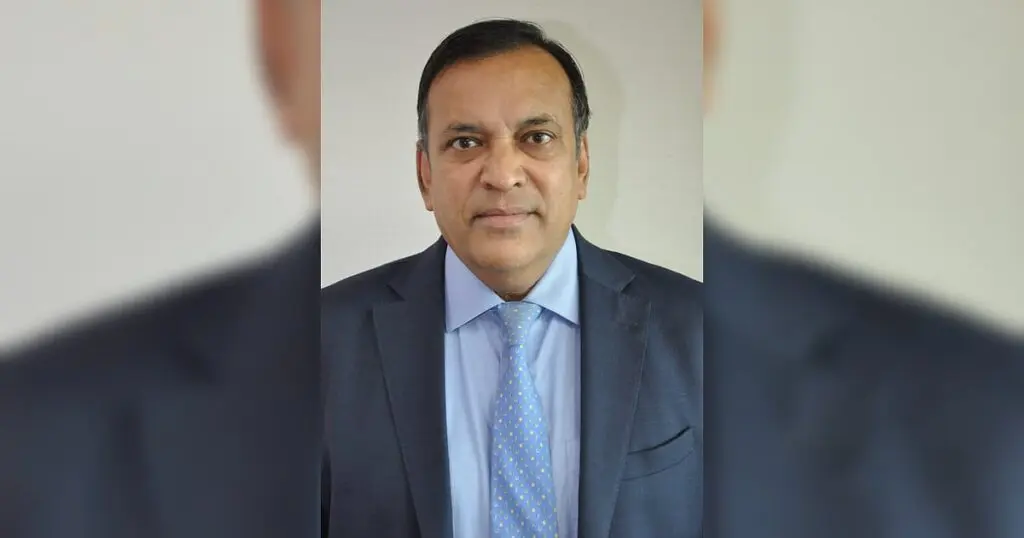
Gurpreet Singh, a former ISRO scientist and IIT Roorkee graduate who spent over seven years on India's NavIC navigation system, said students should build a strong foundation in mathematics, physics, and programming for careers in the space sector. He emphasised that differential equations, linear algebra, probability, and coding are central to real-world space missions.
In an interview with HT Digital, Singh advised students not to start with rocket science but with its fundamentals: algebra, calculus, mechanics, and Python. He said theory must be paired with experiments and simulations, adding that careers in space are not limited to rockets and astronauts, and include flight dynamics, navigation, ground operations, and thermal systems.
Indian Opinion Analysis
The interview sidesteps a pressing structural question: India's space sector is expanding fast, but the number of high-skill jobs it creates each year remains modest compared with the lakhs of engineering graduates entering the workforce. ISRO itself absorbs only a few hundred new scientists annually, and private space start-ups are still scaling. The math and coding foundation Singh recommends is indeed transferable, data science and AI roles in banking, logistics, and defence also demand linear algebra and optimisation. The real test for students is whether the space sector can offer enough entry-level positions to make a specialised curriculum worth the investment, or whether the skills are better treated as a pathway into a wider tech career.
Source: hindustantimes.com
This brief was synthesised by AI from the source linked above.