









Now Reading: Nepal flash flood sweeps 35-plus houses, 5 missing after landslide
-
01
Nepal flash flood sweeps 35-plus houses, 5 missing after landslide


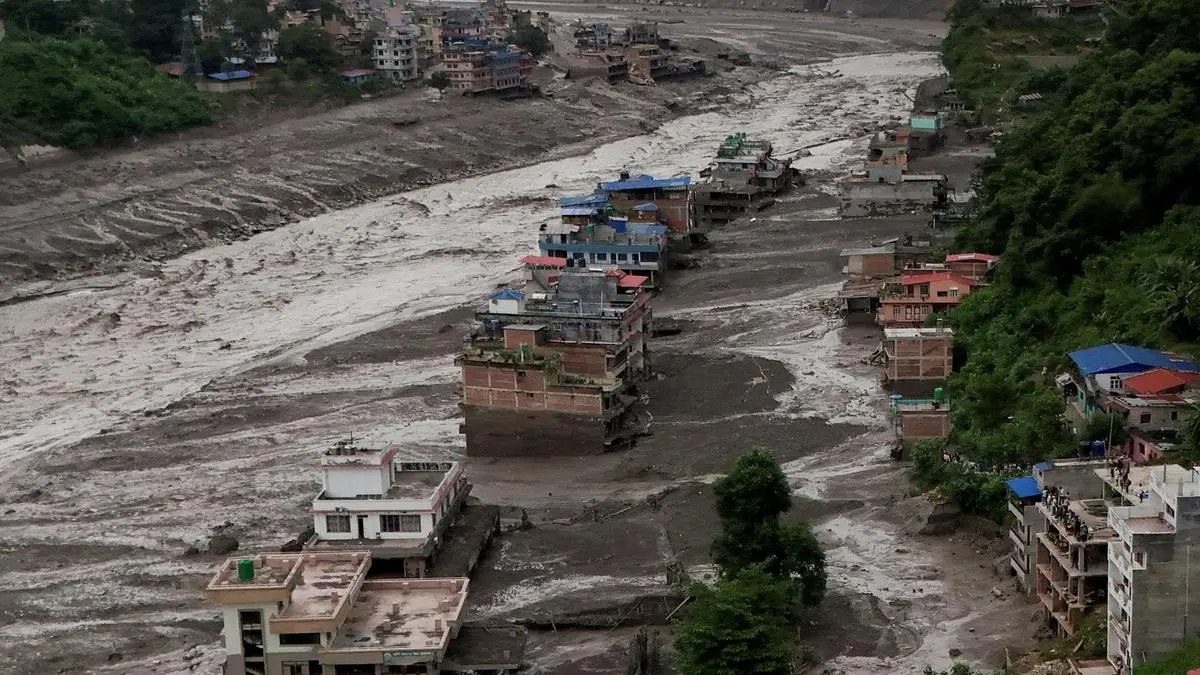
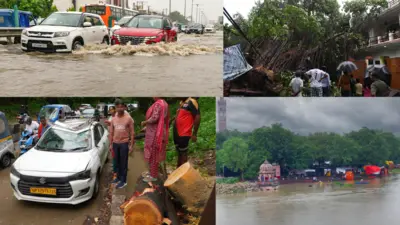
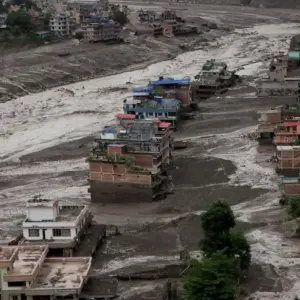
A flash flood in the Budhi Gandaki river system on 11 October swept away more than 35 houses and several bridges in Nepal’s Gorkha district, officials said. Five people were reported missing as rescue and evacuation operations continued, the Free Press Journal reported. No casualties had been confirmed, the district’s chief officer told The Hindu Businessline.
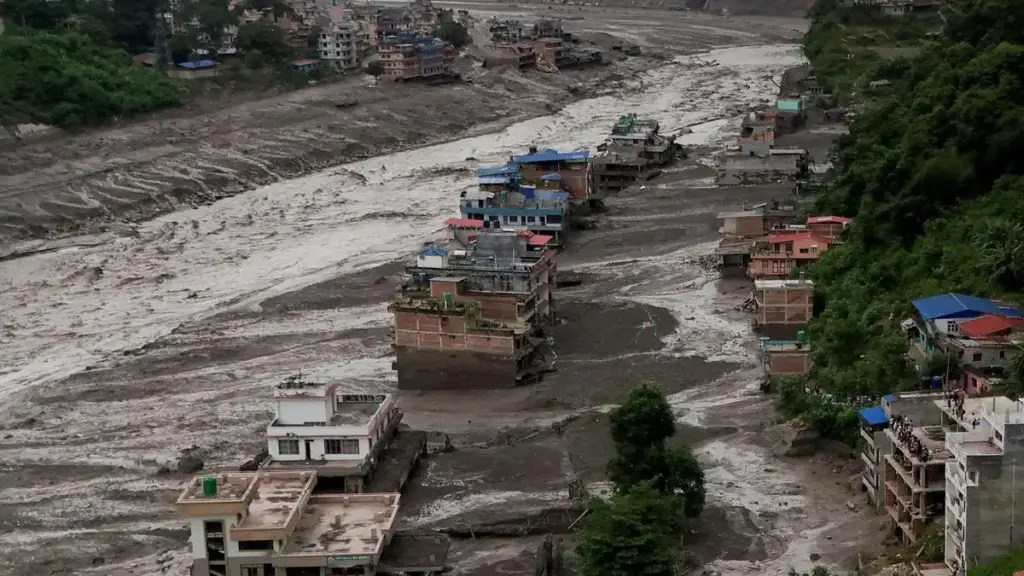
The flood may have been triggered by a landslide that blocked a tributary stream and then released a surge of mud and debris, the International Centre for Integrated Mountain Development said in a preliminary assessment. Residents said the water came early in the morning on 11 October, forcing people in riverside settlements including Chumling and Lokpa to flee. Helicopters were deployed for relief, and police and armed forces were carrying out search operations. The full extent of the damage was not yet known.
Indian Opinion Analysis
Both sources report the same Budhi Gandaki flood but diverge in framing. The Free Press Journal leads with climate-change context, ICIMOD’s cascading-hazard assessment, Western Disturbance analysis and a 2024 study on shifting weather patterns, placing the event inside a long-term environmental question. The Hindu Businessline sticks to a ground-level disaster account: 35-plus houses swept away, evacuation orders, damage to bridges, and resident quotes, with no climate analysis. Neither source adopts a political stance. The Free Press Journal’s framing adds scientific depth but leans toward the abstract, while The Hindu Businessline’s is event-close. The uniform neutral reportage offers no stance conflict, only editorial priority. ICIMOD’s investigation and Nepal’s early-warning gaps remain the concrete open points.
Coverage: 2 sources, 2 neutral
Sources (2): freepressjournal.in (neutral report), thehindubusinessline.com (neutral report)
This brief was synthesised by AI from the 2 sources linked above, so one read covers every framing they carry. Methodology and corrections.