















Now Reading: 68 glacial lakes in J&K classified as potentially dangerous
-
01
68 glacial lakes in J&K classified as potentially dangerous


The Story in Brief
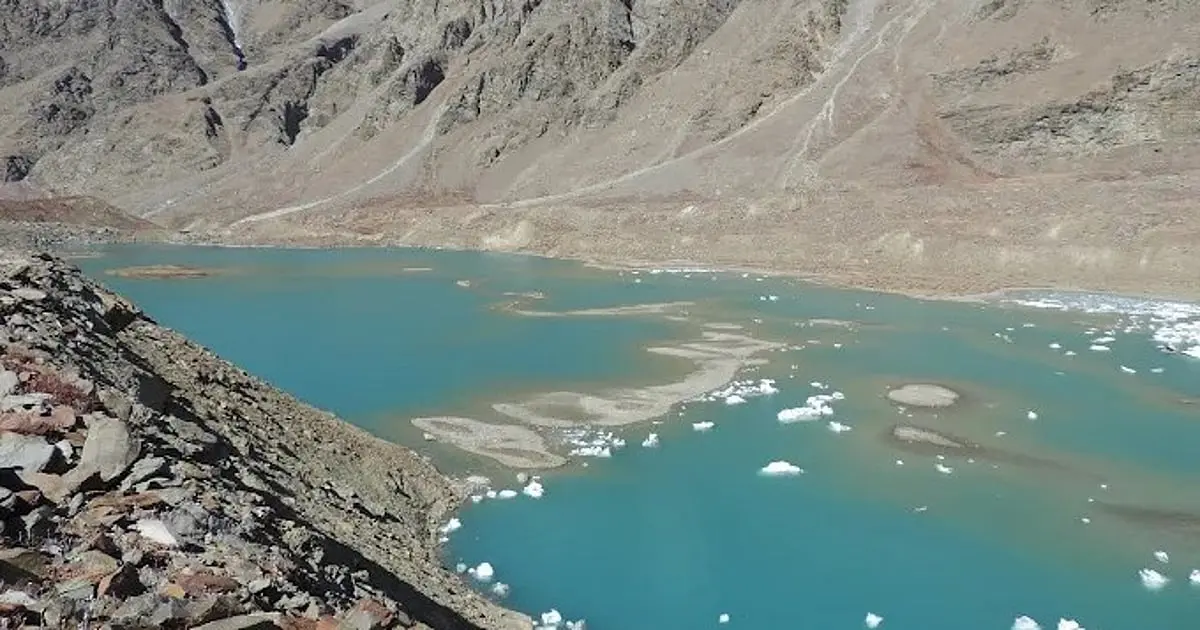
Srinagar: The Jammu and Kashmir Government has acknowledged that 68 of the 616 glacial lakes in the Union Territory are classified as Potentially Dangerous Glacial Lakes (PDGLs). The University of Kashmir identified the lakes across 12 districts, covering 28.62 sq km. The government disclosed this in a reply to NC MLA Tanvir Sadiq in the Legislative Assembly.
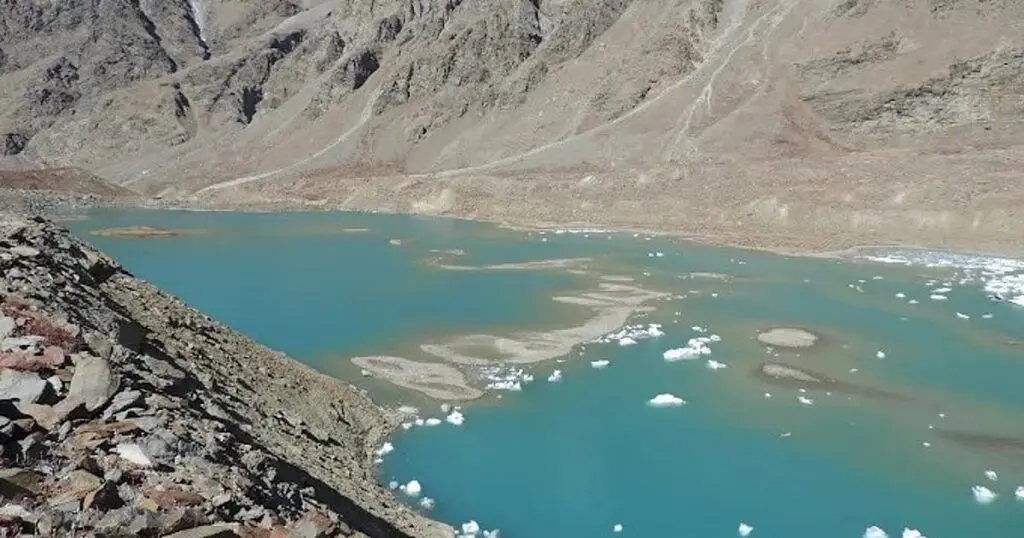
Districts including Kishtwar, Ganderbal, Kulgam and Anantnag face GLOF risk. A Core Committee formed in September 2024 has categorised 24 high-priority lakes into three groups based on 17 risk parameters. C-DAC has been nominated to design an indigenous GIS-based GLOF Early Warning System. A UT-level committee chaired by the Principal Secretary, Home, has held five meetings since April 2024 to review surveillance and mitigation mechanisms.
Update, 3 October 2026: The New Indian Express reports the government disclosed 68 potentially dangerous glacial lakes in the J&K Assembly, with details of the Core Committee and C-DAC early warning system. The Hindu carries a broader analysis of glacial lake monitoring across the Himalaya, while another Hindu article reports Nepal's plan to drain four glacial lakes this fiscal year after the August disaster. The Indian Express covers Uttarakhand's first early-warning system at Vasundhara Tal, with installation starting 6 October 2026.
Indian Opinion Analysis
The New Indian Express and The Hindu both report the J&K glacial lake disclosure with straight factual language, leading with the 68-lake figure and the government reply in the Assembly. The Indian Express covers a separate but parallel story on Uttarakhand's first early-warning system at Vasundhara Tal, which begins installation on 6 October 2026, led by CBRI and Wadia Institute with support from SDRF, NDRF and ITBP. The third Hindu piece turns to Nepal's plan to drain four glacial lakes (Thulagi, Lower Barun, Lumding Tsho and Hongu II) this fiscal year, funded by the Green Climate Fund and UNDP, after the August disaster that killed over 1,400. The coverage is uniform wire-style reporting across three distinct but related Himalayan glacier stories, none shows editorial slant. The key next step is the Vasundhara Tal installation from 29 September to 15 October 2026, and Nepal's design work beginning before mid-July 2027.
Coverage: 4 sources, 4 neutral
Sources (4): newindianexpress.com (neutral report), indianexpress.com (neutral report), thehindu.com (neutral report), thehindu.com (2) (neutral report)
This brief was synthesised by AI from the 4 sources linked above, so one read covers every framing they carry. Methodology and corrections.