






Now Reading: Odisha sets up SEBC commission to restore local body quota
-
01
Odisha sets up SEBC commission to restore local body quota


The Story in Brief
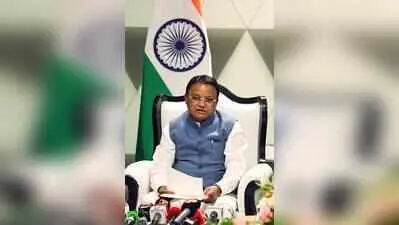
The Odisha government on 7 October 2026 constituted a commission headed by retired Orissa High Court judge Justice Pramath Patnaik to study the political backwardness of socially and educationally backward classes (SEBCs) in local bodies. The move is a step toward restoring reservation in panchayat and urban local body elections, which were dropped in December 2021 after the High Court found the state lacked empirical data to justify the quota. The 2022 panchayat elections were held without SEBC reservation.
The commission will examine SEBC population, political representation, and the nature of their political backwardness in both rural and urban local self-government institutions. Retired IAS officer Bijay Kumar Prusti has been appointed as a member, and department special secretary Sujata Mishra as member secretary. The exercise aims to ensure adequate representation ahead of panchayat elections tentatively planned for early 2027. The Majhi government had earlier provided 11.25% reservation for SEBC students in professional higher education institutions.
Indian Opinion Analysis
Pro-government framings from Times of India and Odisha TV lead with the triple-test compliance and quote BJP leaders welcoming the move as a step to protect SEBC rights. The Hindu and Times of India’s second story also note the political outreach to backward communities months before 2027 polls. Critical framings from The Hindu and Times of India’s second story foreground opposition leaders questioning the timing: BJD and Congress allege the commission is a delaying tactic and that the government could use it to postpone elections. The critical pieces also cite a sociologist calling the three-month window too small and an analyst saying the exercise is politically calculated.
Coverage: 10 sources, 1 pro-government, 1 government-critical, 8 neutral
Sources (10): timesofindia.indiatimes.com (neutral report), odishabytes.com (neutral report), sambadenglish.com (neutral report), thehindu.com (neutral report), kalingatv.com (neutral report), indianexpress.com (neutral report), odishatv.in (pro government), timesofindia.indiatimes.com (2) (neutral report), timesofindia.indiatimes.com (3) (neutral report), thehindu.com (2) (government critical)
This brief was synthesised by AI from the 10 sources linked above, so one read covers every framing they carry. Methodology and corrections.
Update, 9 October 2026: this story now draws on 10 sources.