




















Now Reading: Park play uses bench as metaphor for identity and belonging
-
01
Park play uses bench as metaphor for identity and belonging


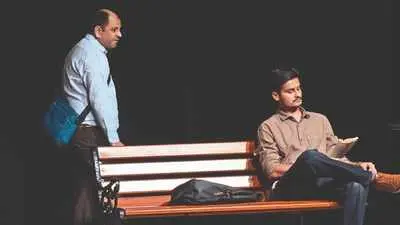
Playwright Manav Kaul's Park, reminiscent of Edward Albee's The Zoo Story, turns a park bench into a metaphor for questions of identity and belonging. The play opens with a man on the phone, and tension builds when a second man enters and fights for the bench, claiming it as his afternoon sleeping spot. The younger man argues the bench is public property, and they eventually share it in a physical comedy that draws laughs.
A third character, a school teacher, interrupts the younger man's peace on another bench, reigniting the debate over ownership. The play draws analogies comparing the bench conflict to places like Palestine and Tibet, with the men likened to Israel and China. However, the review notes the dialogue becomes verbose and the political messaging lacks subtlety, while the background score does too much mood-signalling.
Indian Opinion Analysis
Manav Kaul is known for his minimalist theatre that layers personal drama with political allegory, as seen in earlier works like Hansraj. The use of a single object such as a bench to explore territorial conflict echoes street theatre traditions in India, where limited props force the audience to focus on dialogue and gesture. The references to Palestine and Tibet suggest Kaul is drawing on contemporary geopolitics, but the reviewer's complaint about over-explanation points to a tension between making the politics accessible and trusting the audience. For a playwright who usually favours sparse writing, Park appears to sacrifice ambiguity for clarity. A sharper edit, cutting the verbose passages and letting the physical comedy carry more of the argument, might have made the play's critique more effective.
Source: timesofindia.indiatimes.com
This brief was synthesised by AI from the source linked above. Methodology and corrections.