



















Now Reading: Review explores trauma in Rajkamal Choudhary’s The Dead Fish
-
01
Review explores trauma in Rajkamal Choudhary’s The Dead Fish


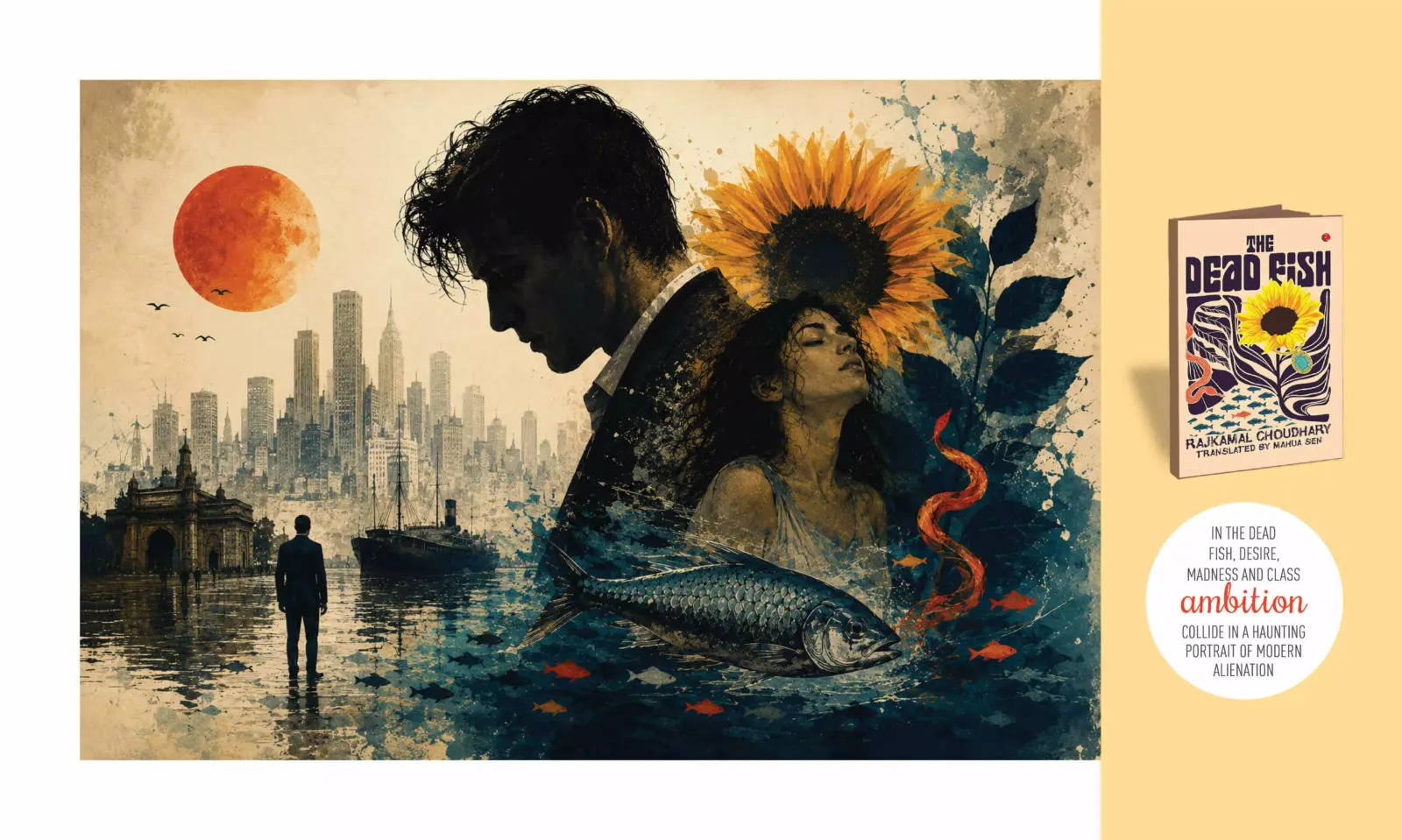
Rajkamal Choudhary's novel 'The Dead Fish', translated from Hindi by Mahua Sen, traces protagonist Nirmal Padmavat's rise from a village boy abandoned after his mother eloped, through Karachi odd jobs to Bombay and New York wealth. The book questions why men of stature turn fragile and insane.
Set against post-Independence disillusionment, Choudhary belonged to the 1960s 'Hungry Generation' that rebelled against corrupt establishment. His fictitious Kalyani Mansion in Calcutta was inaugurated by real chief minister Dr Bidhan Chandra Ray, blending fact with fiction.
Women characters like bewitching Kalyani and singer Shirin face thwarted desire and violence. Nirmal is described as an inhuman devil by his wife's former husband. The novel explores trauma, sexuality and moral decay through psychologically unsettling insights.
Indian Opinion Analysis
Rajkamal Choudhary belongs to the 1960s 'Hungry Generation' that rejected post-Independence India's disillusioning realities. His novel mirrors an era when literature weaponized psychological exposure against societal rot. The review's focus on trauma and moral decay is the outlet's editorial choice, not the text's inherent stance. For readers unfamiliar, Choudhary's work parallels the dark introspection of contemporaries like Samaresh Basu or Kamala Das, examining suppressed sexuality and class dynamics through flawed characters. The fictional Kalyani Mansion's inauguration by actual Bengal CM Bidhan Chandra Ray anchors the surreal in historical fact, blending artifice with reality. Watch for upcoming Hindi translations or reprints as Choudhary's legacy gains renewed academic interest.
Source: millenniumpost.in
This story was synthesised by AI from the source linked above. Methodology and corrections.