












Now Reading: Rupee slump triples Namma Metro finance costs, loss hits Rs 1,717 crore
-
01
Rupee slump triples Namma Metro finance costs, loss hits Rs 1,717 crore

Rupee slump triples Namma Metro finance costs, loss hits Rs 1,717 crore

The Story in Brief
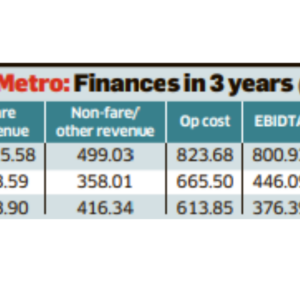
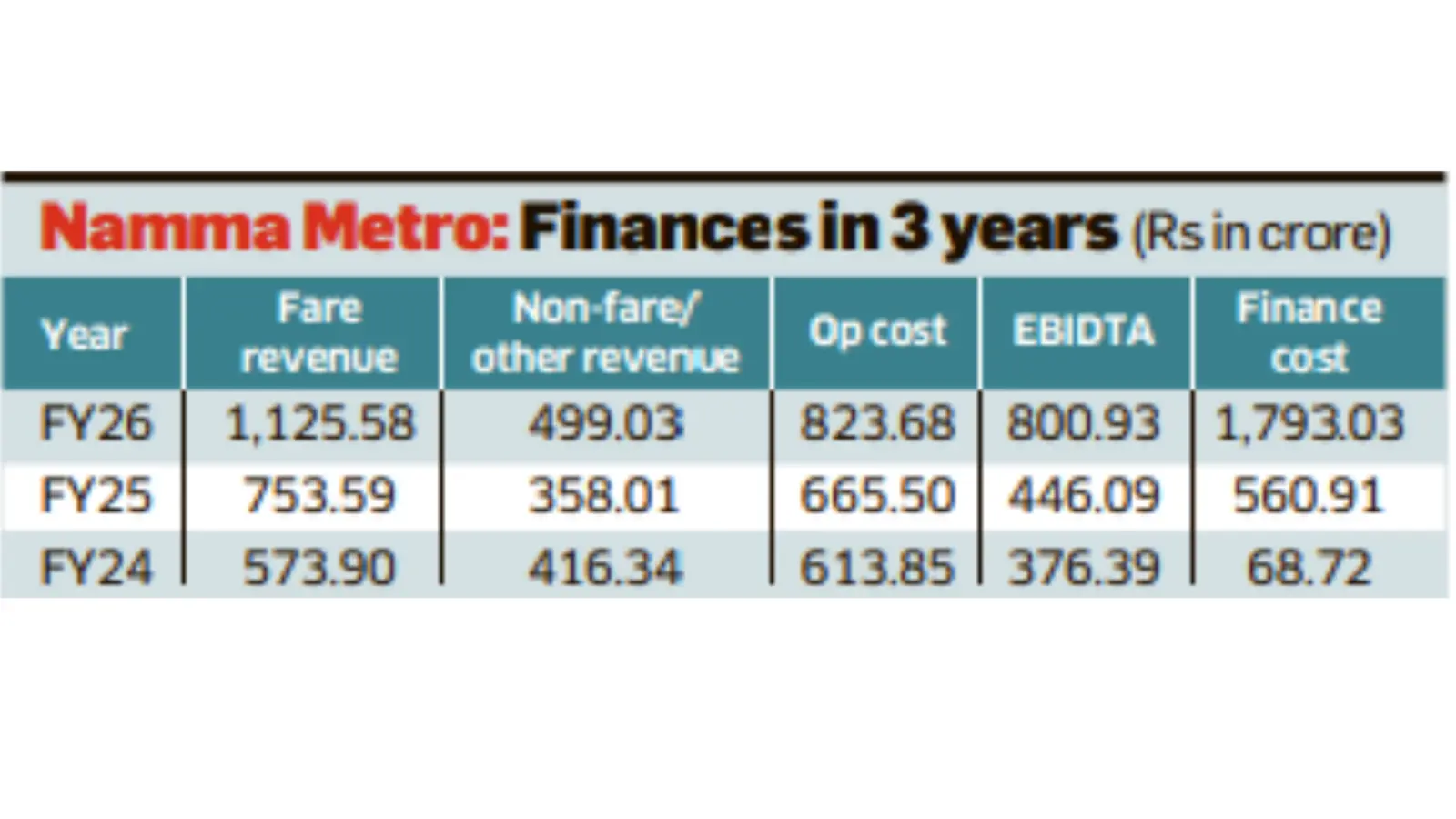
Namma Metro's finance costs nearly tripled to Rs 1,793 crore in 2025-26, driven by the rupee's slide against the euro and dollar, pushing the operator's loss before tax to Rs 1,717.4 crore, according to BMRCL's annual report and data reviewed by Deccan Herald. For the first time since 2019-20, the metro's borrowing costs exceeded its total revenue of Rs 1,624.62 crore.
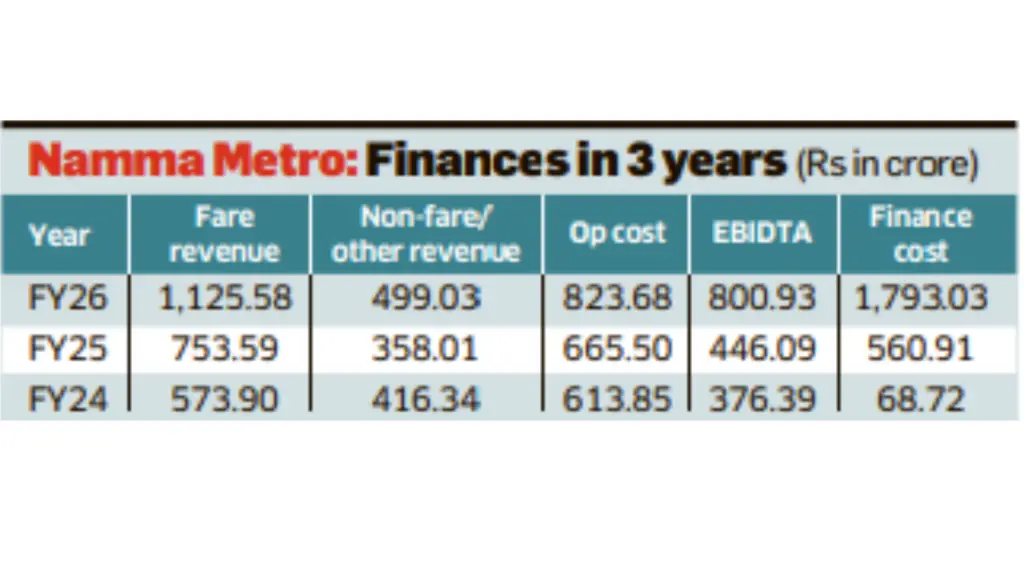
The Times of India reports that ridership rose 12.3% to 31 crore boardings in 2025-26, driven by the new Yellow Line, and fare revenue jumped nearly 50% to Rs 1,125.6 crore after a February 2025 fare revision. BMRCL posted an operational profit of Rs 417.4 crore but the loss widened from Rs 691.6 crore a year earlier due to higher finance costs and depreciation.
Karnataka has asked the Centre to share exchange rate variation and cash losses, arguing it bears 83.8% of project costs while the Centre contributes 16.2%. BJP MP L S Tejasvi Surya disputes this, putting the Centre's share at 53.35%. BMRCL faces a 5% fare hike decision due in February 2027.
Indian Opinion Analysis
Deccan Herald leads with the finance cost spike and the state-Centre funding dispute, giving space to Karnataka's claim that it bears 83.8% of project costs while the Centre contributes only 16.2%, and to BJP MP Tejasvi Surya's counter-figure. The Times of India leads with ridership growth and fare revenue, framing the loss widening as a consequence of higher expenses rather than a policy dispute. Together, the two reports show that while operational metrics improved, the BMRCL's bottom line was undone by a rupee-driven jump in foreign-loan servicing costs. The disagreement on cost-sharing figures between Karnataka and the Centre remains unresolved as the BMRCL faces a 5% fare hike decision due in February 2027.
Coverage: 2 sources, 1 government-critical, 1 neutral
Sources (2): deccanherald.com (government critical), timesofindia.indiatimes.com (neutral report)
This brief was synthesised by AI from the 2 sources linked above, so one read covers every framing they carry. Methodology and corrections.