
















Now Reading: Supreme Court refuses plea to rotate SC, ST reserved seats
-
01
Supreme Court refuses plea to rotate SC, ST reserved seats


The Story in Brief
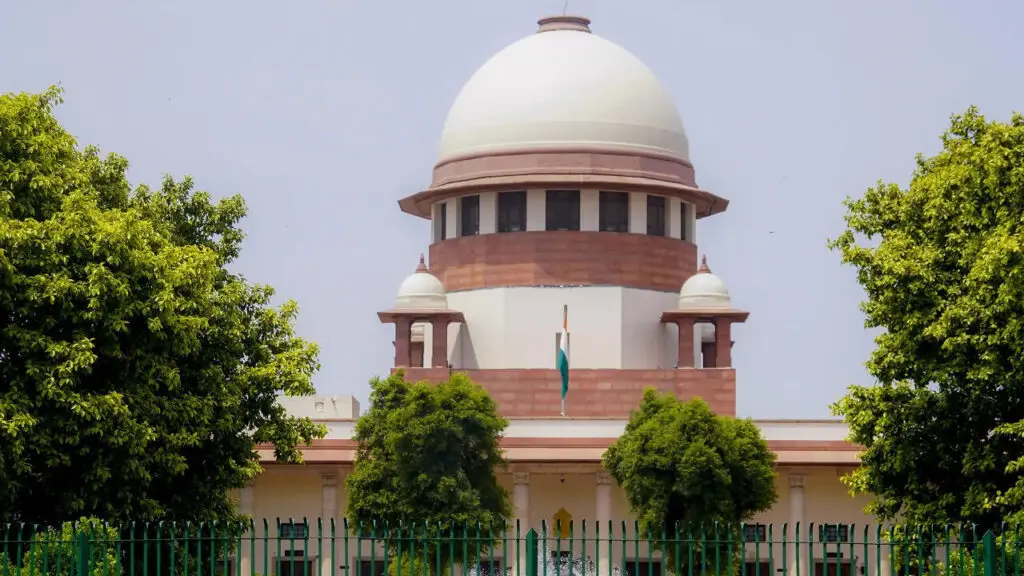
The Supreme Court on Wednesday, 4 November 2026, refused a plea seeking mandatory rotation of constituencies reserved for Scheduled Castes and Scheduled Tribes in Parliament and state assemblies, ruling that the matter lies within Parliament’s domain and cannot be directed by courts.
A bench of Chief Justice Surya Kant and Justices Joymalya Bagchi and V Mohana upheld the Allahabad High Court’s judgment sustaining Section 9(1)(c) of the Delimitation Act, 2002. The provision identifies reserved constituencies in areas with a comparatively higher proportion of SC/ST residents and does not mandate periodic rotation. The court said the petitioner, Jagdish Singh, an elector from the 191-Kadipur constituency in Uttar Pradesh that has been reserved for nearly seven decades, could approach public representatives to build consensus for legislative change. Justice Bagchi remarked that voters in a multiparty democracy were expected to vote by political ideology, not caste or religion.
All six news outlets reported the judgment uniformly via the PTI wire service or the court order.
Update, 4 November 2026: Orissa Post now also reports the Supreme Court’s refusal to interfere with the Allahabad High Court judgment. Its account matches the PTI wire copy carried by Hindustan Times, India Today, Deccan Herald and New Indian Express, confirming the bench’s reasoning and the petitioner’s option to approach public representatives.
Indian Opinion Analysis
All six sources cover the Supreme Court’s refusal verbatim from the PTI wire report or the court order. Verdictum.in provides the fullest quote of Justice Bagchi’s reasoning that the court cannot ‘rewrite the Constitution or the statute’. Hindustan Times names the CJI’s remark that the petitioner was ‘dialling the wrong number’. The identical framing across every outlet, neutral-report, reflects the straight reporting of a court order that declined to substitute its judgment for Parliament’s. No source questions the ruling or foregrounds the petitioner’s argument that seven decades of continuous reservation limited voter choice. The balanced reading is that the court left the rotational policy question firmly with the legislature, rejecting judicial intervention. The next concrete step named in every account is the petitioner’s option to approach public representatives to build a legislative consensus.
Coverage: 4 sources, 4 neutral
Sources (4): verdictum.in (neutral report), hindustantimes.com (neutral report), indiatoday.in (neutral report), Syndicated copy (carried by deccanherald.com, newindianexpress.com, orissapost.com)
This brief was synthesised by AI from the 4 sources linked above, so one read covers every framing they carry. Methodology and corrections.