




















Now Reading: Supreme Court Requires Judicial Member for Final PMLA Adjudication
-
01
Supreme Court Requires Judicial Member for Final PMLA Adjudication


The Story in Brief
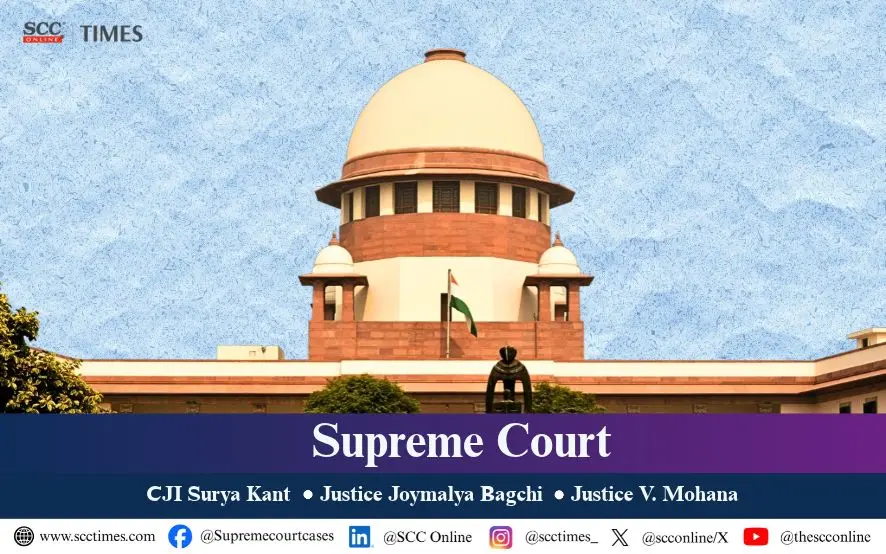
The Supreme Court has ruled that a Judicial Member must sit on the Adjudicating Authority bench that makes final decisions under Sections 8(2) and 8(3) of the Prevention of Money Laundering Act. A single member, including a non-judicial member, may issue a show-cause notice under Section 8(1). The Judicial Member need not be the Authority’s Chairperson, whose role the Court described as administrative.
The Court also said decisions under Sections 9, 20(4) and 21(4), which are ancillary to Section 8 adjudication, must involve a Judicial Member. It upheld Sections 6(5)(b) and 6(7) and recommended that the Union consider repealing the 2009 amendment and restoring multiple adjudicating authorities because of rising case pendency. The Court disposed of the connected civil and criminal appeals and partly allowed the writ petition.
Indian Opinion Analysis
Both scconline.com and Verdictum report the distinction between issuing a notice and deciding whether property is involved in money laundering, while also noting that the Judicial Member need not chair the Authority. Their accounts are straight reporting, not competing political framings. The ruling preserves the Authority’s ability to issue notices through a single member but requires judicial participation at final adjudication and in specified ancillary determinations. The reports differ in emphasis: scconline.com includes the Court’s recommendation to reconsider the 2009 amendment in light of case pendency, while Verdictum gives more space to the parties’ arguments and the reasoning on single-member benches. Whether the Union considers restoring multiple authorities is the concrete point left open.
Coverage: 2 sources, 2 neutral
Sources (2): scconline.com (neutral report), verdictum.in (neutral report)
This brief was synthesised by AI from the 2 sources linked above, so one read covers every framing they carry. Methodology and corrections.