











Now Reading: Supreme Court considers doxxing rules as teen protestor targeted online
-
01
Supreme Court considers doxxing rules as teen protestor targeted online

Supreme Court considers doxxing rules as teen protestor targeted online


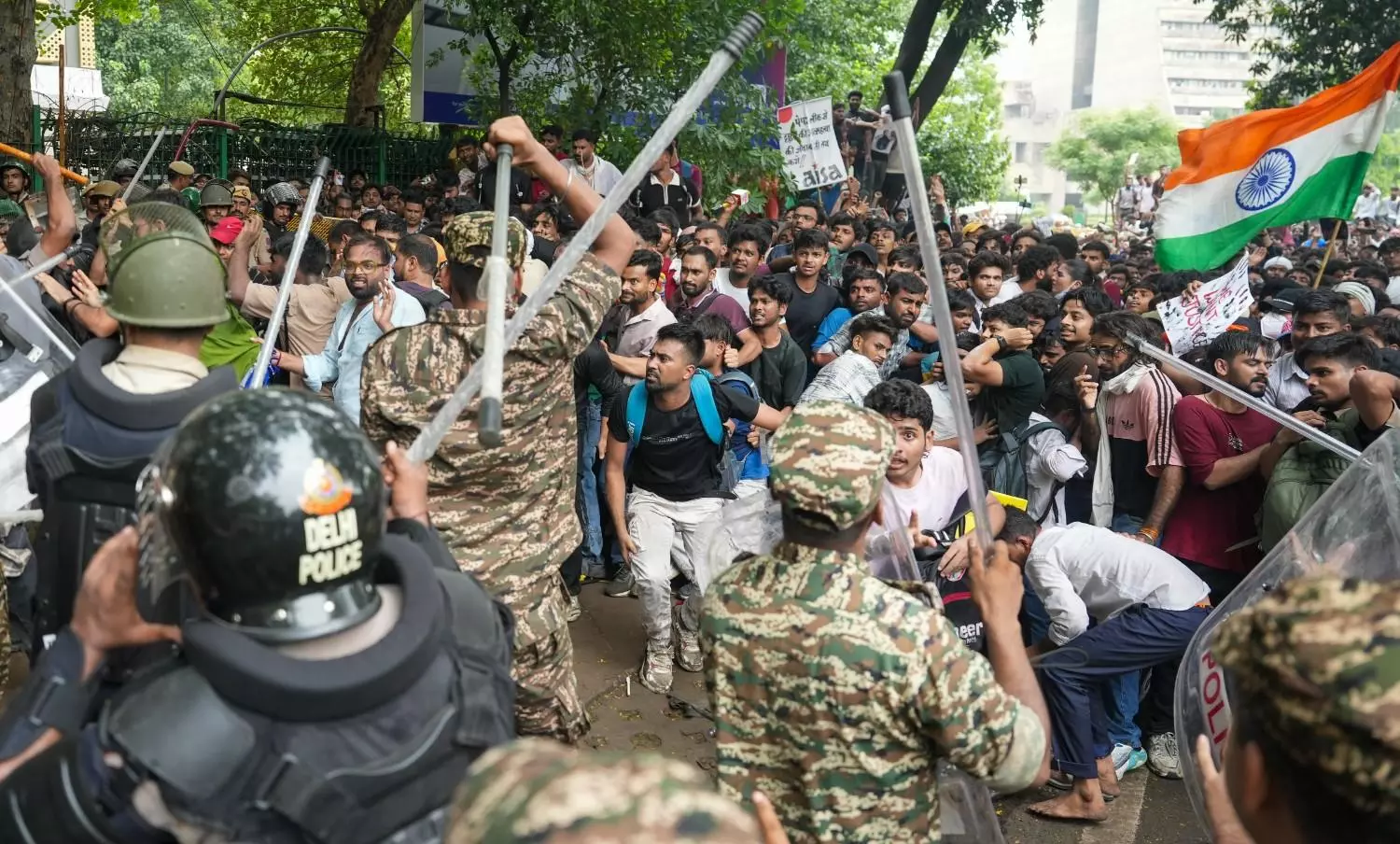
The Supreme Court has directed the Centre to consider creating a mechanism for early reporting and disabling of content involving doxxing, deepfakes, or threats of physical violence. The order came on a PIL filed by advocate Narendra Kumar Goswami. Separately, the Internet Freedom Foundation has filed complaints with the National Commission for Women and the National Commission for Protection of Child Rights over the doxxing and online threats faced by women who participated in student protests in July 2026.
TheNewsMinute reports that a 15-year-old girl who joined those protests was doxxed by a platform called The Jaipur Dialogues, which posted her details on X and branded her 'most wanted'. The girl then received threats of rape, murder and acid attacks, and her family went into hiding. The Jaipur Dialogues defended its actions as those of a 'responsible nationalist platform'. TheNewsMinute found that at least two BJP politicians serve as directors of Jaipur Dialogues Forum, the not-for-profit behind the platform.
TheFederal notes that doxxing is not new in India, citing cases like the 2021 Sulli Deals case and the Bulli Bai app. Experts quoted by the outlet say existing laws, including the IT Act and Bharatiya Nyaya Sanhita, can be used against doxxing, but weak enforcement remains a problem. The Supreme Court's 2015 ruling in Shreya Singhal v. Union of India clarified that intermediaries cannot be compelled to act on private complaints, only on court or government directives.
Indian Opinion Analysis
The two sources frame the same story very differently. TheFederal provides a broader legal and historical overview of doxxing in India, quoting experts on enforcement gaps and the Supreme Court's intermediary liability ruling. It treats the case of the 15-year-old as one example in a pattern. TheNewsMinute, by contrast, leads with a detailed investigation into the organisation that doxxed the girl, foregrounding its political connections to the BJP. It presents the incident as a targeted harassment campaign by a platform with communal content. The measured read is that while the legal framework against doxxing exists, enforcement is weak and online harassment can be politically motivated. Watch for the Centre's response to the Supreme Court's directive.
Coverage: 2 sources, 1 government-critical, 1 neutral
Sources (2): thefederal.com (neutral report), thenewsminute.com (government critical)
This story was synthesised by AI from the 2 sources linked above. Methodology and corrections.
Updated: this story now draws on 2 sources.