






















Now Reading: Demonetisation ten years on: black money curb failed, say economists
-
01
Demonetisation ten years on: black money curb failed, say economists



The Story in Brief
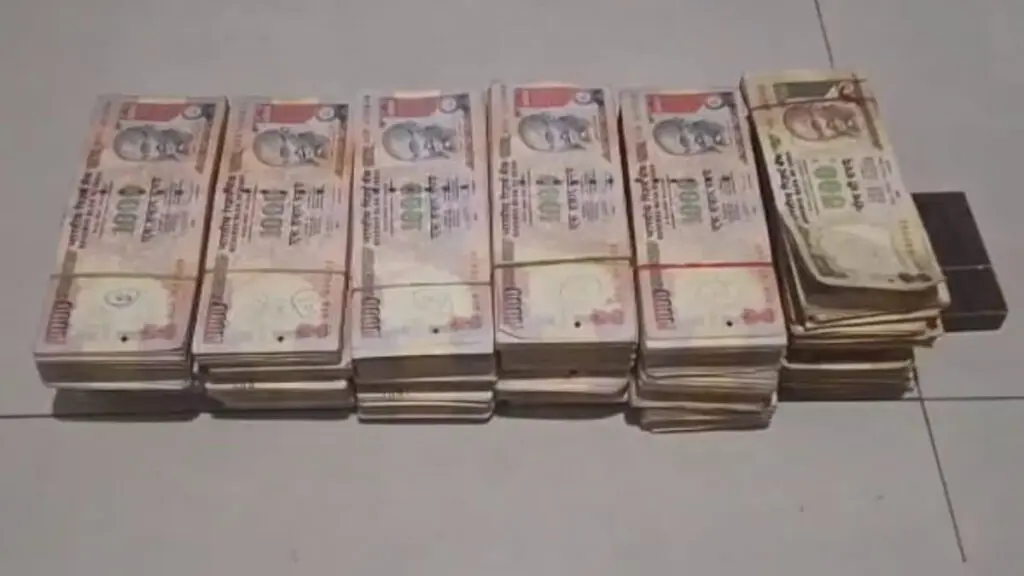
On the tenth anniversary of Prime Minister Narendra Modi’s November 8, 2016 demonetisation, which invalidated 86% of currency in circulation, Mathrubhumi English and Scroll.in assess the move as a failure on its core objective of curbing black money. RBI data shows 99.3% of the Rs 15.42 lakh crore in specified notes returned to the banking system, contradicting the government’s expectation that large sums would be extinguished.
Economists Jayati Ghosh, C P Chandrasekhar and Parakala Prabhakar told Mathrubhumi that black money is held in assets or through formal financial channels, not cash. Scroll.in called demonetisation a ‘resounding failure’ and a forerunner of centralised decision-making. Orissa Post columnist Ajit Ranade noted that the stated objectives kept shifting over time, making it easier to claim achievement without settling whether original promises were fulfilled. A common thread across all three outlets is that the sacrifice endured by the public still lacks an honest accounting of what it accomplished.
The original announcement targeted black money, corruption, counterfeit currency and terrorism, subsequently the goals expanded to include tax compliance, formalisation and digital payments. Ten years on, no single agreed measure of success has emerged.
Update, 8 November 2026: Orissa Post columnist Ajit Ranade adds the framing of a national ordeal, noting that public trust in the PM’s decision was high at the time but that no honest accounting of the sacrifice exists. He highlights that the original objectives kept shifting, from black money and counterfeits to tax compliance and formalisation, making the move easier to defend without settling the original promises.
Indian Opinion Analysis
All three outlets agree on the core failure: 99.3% of the withdrawn currency returned, undermining the black-money rationale. Where they differ is in scope. Scroll.in and Orissa Post frame the decision as callous and capricious, linking it to the Covid-19 lockdown and shifting official justifications. Mathrubhumi stays closer to straight economic assessment, quoting three named economists. Orissa Post’s Ajit Ranade adds the nuance of public trust at the time, many supported the hardship, but concludes that no honest accounting exists. The uniform RBI data anchors the factual common ground, the analytical divergence is over whether the story is about policy failure alone or about a pattern of governance. Neither side disputes the return figure or the hardship. The open question, as all three imply, is what, if anything, the disruption achieved.
Coverage: 3 sources, 2 government-critical, 1 neutral
Sources (3): mathrubhumi.com (neutral report), scroll.in (government critical), orissapost.com (government critical)
This brief was synthesised by AI from the 3 sources linked above, so one read covers every framing they carry. Methodology and corrections.