














Now Reading: Third Mumbai land grab faces revolt from 124 Raigad villages
-
01
Third Mumbai land grab faces revolt from 124 Raigad villages


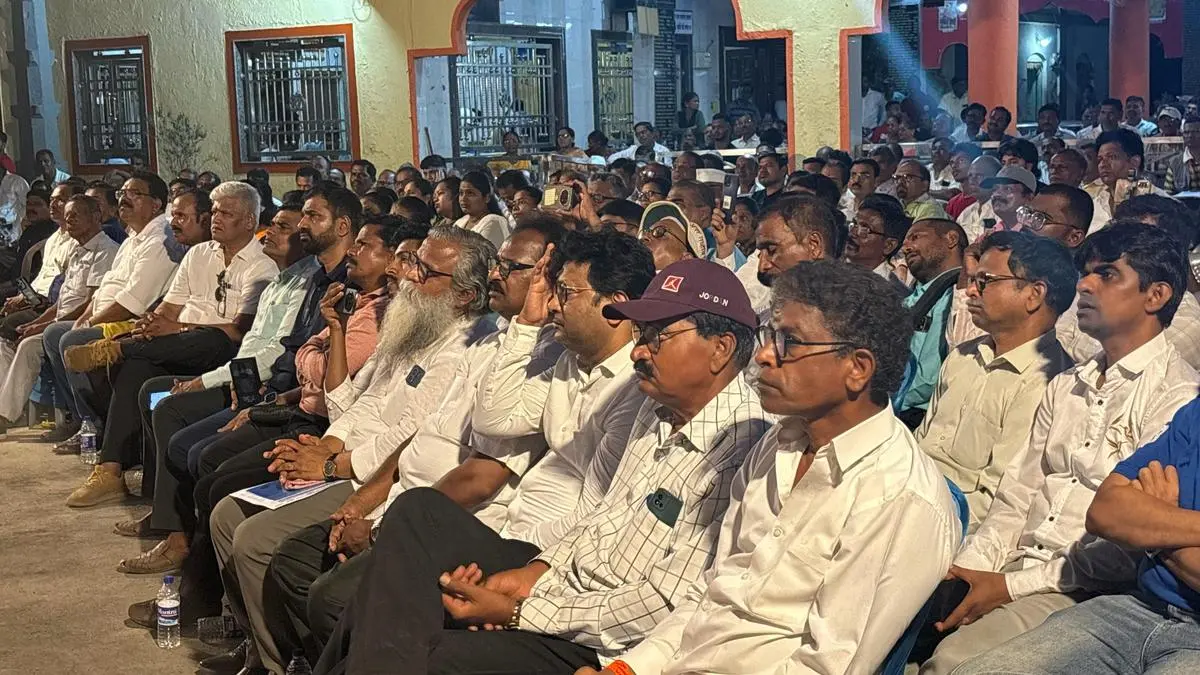
Villagers from 124 villages across Raigad district are protesting the Maharashtra government's Third Mumbai project, a 323 sq km satellite city planned across Uran, Panvel and Pen tehsils. The Mumbai Metropolitan Region Development Authority issued its first notification in October 2024, appointing the New Town Development Authority as the planning authority. Chief Minister Devendra Fadnavis announced the project at Davos this year, pitching it as a potential hub on the scale of Dubai or Singapore, and the cabinet approved a land acquisition and distribution policy in July 2026.
Landowners say the government's compensation of Rs 1 lakh per guntha, based on the ready-reckoner rate, is a fraction of the market value, which ranges from Rs 5 lakh to Rs 15 lakh per guntha. Villagers gathered outside the Commissioner's office on Independence Day to protest, and 25,000 objections have been filed against the acquisition. Sudhakar Patil, the villagers' committee chief, said the government has ignored all objections. Atul Mhatre, an architect from Raigad, said villagers want to be treated as partners, not contributors. The next step is the government's response to the pending objections.
Indian Opinion Analysis
The wedge between official ready-reckoner rates and market prices is the oldest fault line in Indian land acquisition. The 2013 Land Acquisition Act was intended to close that gap by requiring a social impact assessment, consent of at least 70 per cent of landowners for public-private projects, and a compensation multiple of up to four times the market value. Yet the gap endures when states notify rates that lag far behind the prices developers and buyers actually pay. Raigad's 124 villages now face the same arithmetic that Navi Mumbai's original landowners encountered in the 1970s, CIDCO's offer of 12.5 per cent returned land is still being litigated after four decades. What makes this round different is the sheer compression of geography: three of India's largest infrastructure assets, Atal Setu, Navi Mumbai airport and JNPT, cluster within 20 km of the proposed city.
Source: frontline.thehindu.com
This brief was synthesised by AI from the source linked above. Methodology and corrections.