
















Now Reading: Tikait calls for Bihar stir over land acquisition, compensation
-
01
Tikait calls for Bihar stir over land acquisition, compensation


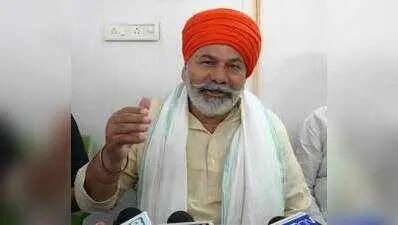
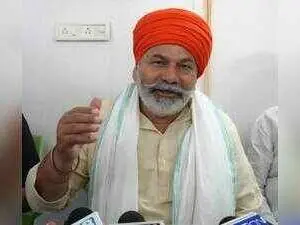
Bharatiya Kisan Union functionary Rakesh Singh Tikait on Wednesday, 7 October 2026, called on farmers in Bihar to launch a statewide agitation demanding fair compensation for land acquired by the state government and the repeal of the Bihar Town Development Act, 2026. The act facilitates the acquisition of agricultural land for 11 satellite township projects across 10 districts, including Patna, Darbhanga, and Gaya, covering lakhs of acres.
Tikait alleged that farmers' interests have been weakened through the abolition of agricultural mandis and now through land acquisition for development. He demanded a farm loan waiver, implementation of MSP for all crops based on the C2+50% formula, and a monthly pension of Rs 10,000 for farmers. The Hindu reports that Tikait also demanded the act be scrapped, mandatory social impact assessments, a transparent pricing mechanism, and a legal guarantee over land value under land pooling schemes. Times of India reports that Tikait urged migrant workers to organise protests if not paid adequate compensation.
Tikait warned that if the demands are not met within a month, the Samyukt Kisan Morcha and farmers' organisations will organise a massive farmers' march in Patna in November 2026 with a sit-in protest until the law is withdrawn.
Indian Opinion Analysis
Times of India's shorter report leads with Tikait's call for agitation and his list of demands, presenting a standard event story without editorial framing. The Hindu devotes far more space to Tikait's detailed critique of the Bihar Town Development Act, 2026, including his specific objections to the lack of social impact assessments, unclear compensation formulas in land pooling, and the potential for land speculation. The Hindu's coverage amplifies the criticism by foregrounding Tikait's procedural and legal questions, whereas Times of India omits many of those structural complaints. A balanced reading notes that both outlets agree on the core fact: Tikait has set a one-month deadline for the government, after which a march in Patna in November 2026 will follow.
Coverage: 2 sources, 1 government-critical, 1 neutral
Sources (2): timesofindia.indiatimes.com (neutral report), thehindu.com (government critical)
This brief was synthesised by AI from the 2 sources linked above, so one read covers every framing they carry. Methodology and corrections.