















Now Reading: Trump turbulence in US-India ties may be permanent
-
01
Trump turbulence in US-India ties may be permanent



India's confidence that it could manage Donald Trump's return to the White House in 2025 has proved misplaced, with bilateral relations now experiencing their sharpest turbulence in over two decades. The Federal reports that Trump has imposed punitive tariffs, threatened sanctions over India's Russian oil purchases, ordered deportations of undocumented Indians on military planes, and signalled renewed interest in Pakistan. The US is also considering a 100 per cent tariff on countries buying Russian oil, which would hit India hard as Russian oil made up 42.9 per cent of its energy imports in June 2026. Indian students face a 62 per cent year-on-year drop in F-1 visa approvals.
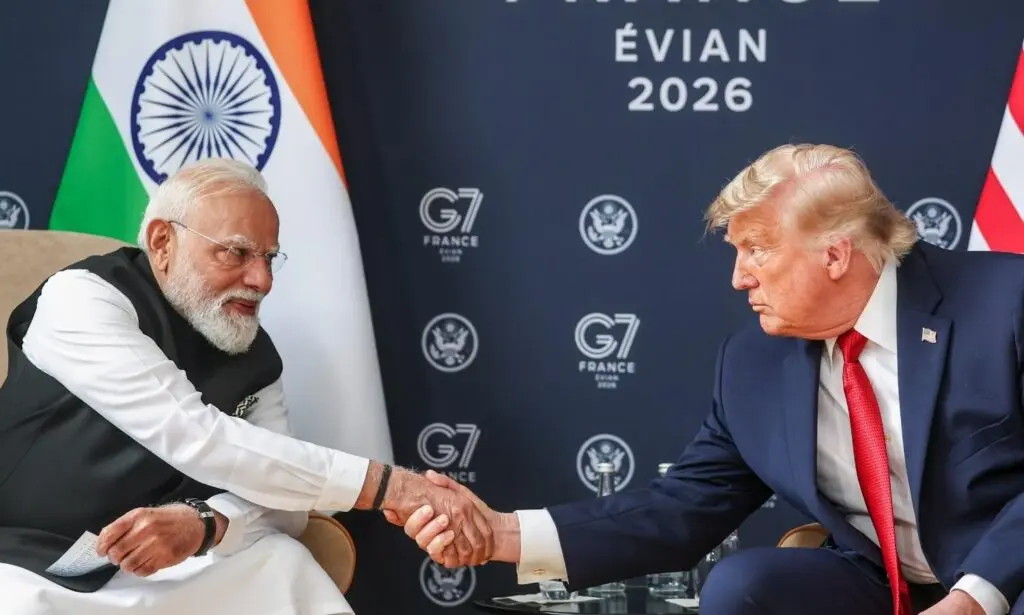
Former State Department official Evan Feigenbaum, speaking at the Carnegie India Centre, argued that the most damaging consequence is not tariffs but the return of politics and third-party disputes to the bilateral relationship. He described this as a 'slow-motion catastrophe', noting that the strategic principle of insulating ties from disagreements over third countries is being abandoned. The US has linked India's Russian oil purchases to the bilateral relationship for the first time in decades. Feigenbaum added that Trump is fundamentally transactional and lacks a coherent strategic view of Asia, pointing to the administration's tariffing of allies and picking fights with India.
Indian Opinion Analysis
The Federal frames the story as a structural crisis in US-India ties, emphasising Trump's tariffs, deportations and visa crackdown, and questioning whether the turbulence is temporary or signals a deeper American shift. The Print focuses on Evan Feigenbaum's critique of the Trump administration as transactional and unstrategic, stressing the return of third-party disputes to the relationship. Both sources agree the relationship is under unprecedented strain, but The Federal highlights the concrete impact on energy imports and visas, while The Print foregrounds the loss of strategic trust and the abandonment of the principle of insulating bilateral ties from third-country disagreements. Readers should note that both sources are critical of Trump's approach, but The Federal offers a more data-driven picture of material consequences, while The Print provides an insider's strategic perspective. The key question is whether Washington's sanctions and tariff regime will become institutionalised, regardless of who is in the White House.
Coverage: 2 sources, 2 government-critical
Sources (2): thefederal.com (government critical), theprint.in (government critical)
This story was synthesised by AI from the 2 sources linked above. Methodology and corrections.
Updated: this story now draws on 2 sources.