

















Now Reading: Why Lakshmi footprints and lemon-chilli toran adorn doors on Diwali
-
01
Why Lakshmi footprints and lemon-chilli toran adorn doors on Diwali


The Story in Brief
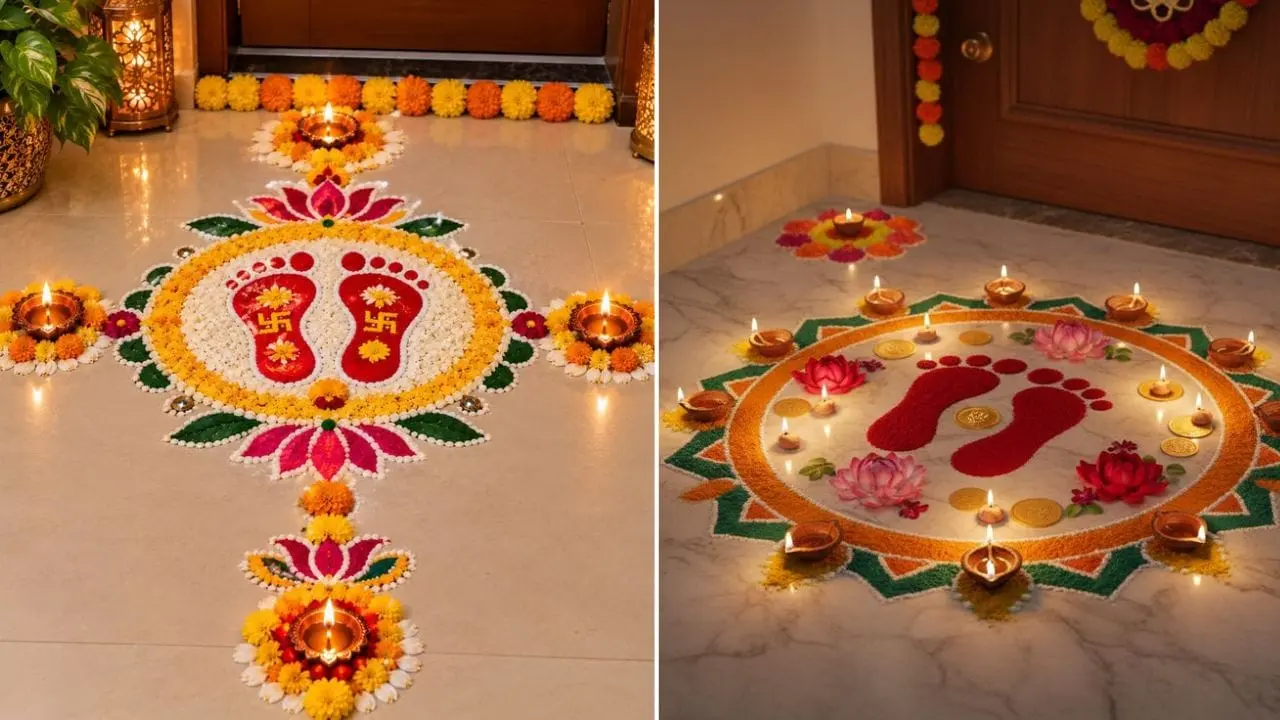
On Diwali, many Hindu households draw Goddess Lakshmi's footprints near the main entrance, a tradition explained by news9live.com. The footprints, made with rice flour or kumkum, are drawn with toes pointing inward to symbolically invite the goddess of prosperity into the home, often leading toward the puja room.
Times Now reports a complementary tradition: hanging a lemon-and-chilli toran at the door. According to lore, while Lakshmi visits homes on Diwali night, her elder sister Alakshmi, associated with poverty and quarrels, also roams. The toran is believed to satisfy Alakshmi's taste for sour and spicy things, keeping her outside so Lakshmi's blessings fill the house.
Both practices are devotional, not compulsory. news9live notes families may also draw footprints near cash boxes, while Times Now stresses Alakshmi is not evil but a reminder of what to keep away. The core idea across both traditions is welcoming prosperity with devotion and gratitude.
Indian Opinion Analysis
Both sources cover the same Diwali custom of inviting Lakshmi, but they frame it from opposite ends. news9live gives a straight, informative explanation of the footprint tradition, its symbolism, method, and regional variations, with no slant. Times Now, by contrast, leads with the dramatic premise that Lakshmi's 'elder sister' Alakshmi also visits and must be kept at bay, using a sensationalist hook ('the toran you must hang'). Where news9live sticks to ritual description, Times Now foregrounds lore, speculation, and a warning tone. The two outlets agree on the underlying belief but differ in emphasis: one reports the practice neutrally, the other packages it as a spiritual alert. Neither source is government-related, so stance tags reflect framing choices.
Coverage: 2 sources, 1 neutral, 1 sensationalist
Sources (2): news9live.com (neutral report), timesnownews.com (sensationalist)
This brief was synthesised by AI from the 2 sources linked above, so one read covers every framing they carry. Methodology and corrections.