















Now Reading: Fukushima dinosaur bone from 1999 identified as 3-metre iguanodontian
-
01
Fukushima dinosaur bone from 1999 identified as 3-metre iguanodontian

Fukushima dinosaur bone from 1999 identified as 3-metre iguanodontian


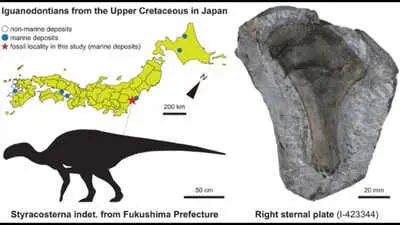
Times of India reports that a dinosaur bone discovered in Fukushima, Japan, in 1999 and left unstudied for over two decades has been identified as the breastbone of a plant-eating iguanodontian. Researchers…
The Story in Brief
Times of India reports that a dinosaur bone discovered in Fukushima, Japan, in 1999 and left unstudied for over two decades has been identified as the breastbone of a plant-eating iguanodontian. Researchers estimate the dinosaur was about 3 metres long, much smaller than other iguanodontian fossils found in the same geological formation. The finding suggests that dinosaurs of different sizes lived in coastal East Asia during the Late Cretaceous, around 90 to 88 million years ago. The study was published in Paleontological Research in 2026.
The Indian Opinion
The 20-year wait to study this fossil might seem slow, but it reflects how underfunded paleontology often is even in wealthy countries. Indian readers may wonder how many fossils lie unexamined in our own museums. The claim that smaller dinosaurs lived alongside larger ones is intriguing, but one bone cannot confirm a species. A more complete skeleton would settle the question. Until then, we should treat this as a clue, not a conclusion.
Source: timesofindia.indiatimes.com
This story was synthesised by AI from the source linked above.
Updated: this story now draws on 1 sources.