




















Now Reading: 31 University of Hyderabad scientists in Stanford top 2% list
-
01
31 University of Hyderabad scientists in Stanford top 2% list


The Story in Brief
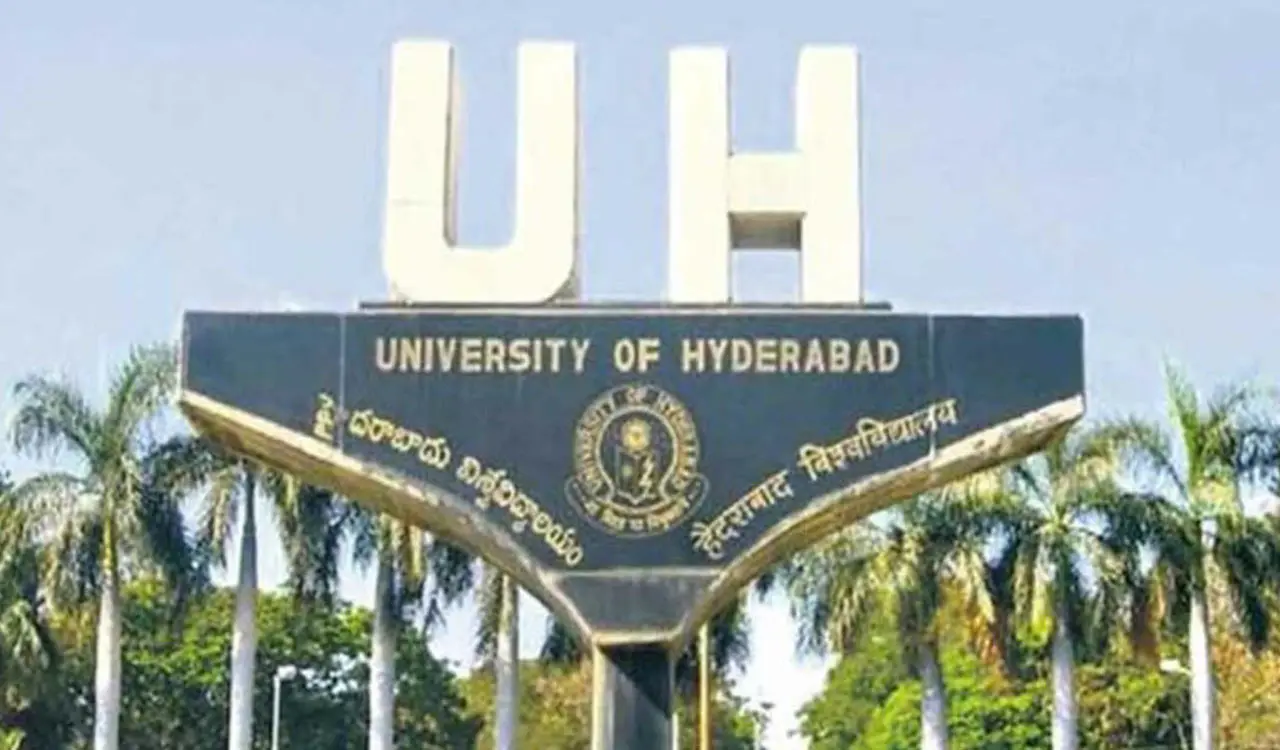
Thirty-one researchers from the University of Hyderabad (UoH) have been named in the 2026 Stanford-Elsevier database of highly cited researchers, known as the ‘World Top 2% Scientists’, the university said on 11 October. UoH ranks third among central universities, after Banaras Hindu University and the University of Delhi, and 18th among India’s top 20 institutions. Nine researchers each are from the School of Chemistry and the School of Life Sciences, four from Computer and Information Sciences, three from Physics, and two each from English, Earth Sciences and the Advanced Centre of Research in High Energy Materials.
Of the 31, 25 appear on the career-long list, measuring cumulative impact through 2025, and 18 on the single-year list, based on 2025 citations, with 12 featuring in both categories. The database, compiled by Stanford’s John Ioannidis using Scopus data, selects researchers ranking among the top 100,000 by composite citation score or within the top 2% of their subfield. The inclusion of English faculty alongside scientists reflects UoH’s research breadth, the university said.
Update, 14 October 2026: The Times of India on 13 October reported that nearly two dozen faculty from IIT-Patna, NIT-Patna and Central University of South Bihar are on the same 2026 Stanford-Elsevier list, with IIT-P’s T N Singh among those named. The Hindu on 13 October rounded up Andhra Pradesh researchers, confirming SRM University-AP’s rise from 7 to 20 researchers and the seventh consecutive listing of Andhra Loyola College physicist M.C. Rao.
Indian Opinion Analysis
The coverage splits between institutional press releases and a national overview. Telangana Today, Siasat and The Hans India report the University of Hyderabad tally with named researchers and subfield breakdowns, a neutral institutional announcement. The Economic Times provides a national aggregate of 6,953 India-affiliated researchers and flags a slowdown in single-year growth, a more analytical framing. The Hindu, Times of India and Medical Dialogues similarly report individual institution figures without any critical frame. The only analytical note comes from The Economic Times, which cautions that the database measures representation, not research quality, and that year-on-year institutional comparisons require consistent name-matching. The uniformity of coverage, mostly wire-ready announcements, leaves no meaningful discrepancy to reconcile beyond the national versus local scope each outlet chooses.
Coverage: 10 sources, 10 neutral
Sources (10): telanganatoday.com (neutral report), siasat.com (neutral report), thehansindia.com (neutral report), economictimes.indiatimes.com (neutral report), thehindu.com (neutral report), medicaldialogues.in (neutral report), thehansindia.com (2) (neutral report), thehansindia.com (3) (neutral report), timesofindia.indiatimes.com (neutral report), thehindu.com (2) (neutral report)
This brief was synthesised by AI from the 10 sources linked above, so one read covers every framing they carry. Methodology and corrections.