







Now Reading: 500-year-old Vishnu idol unearthed in Ranipet riverbed
-
01
500-year-old Vishnu idol unearthed in Ranipet riverbed


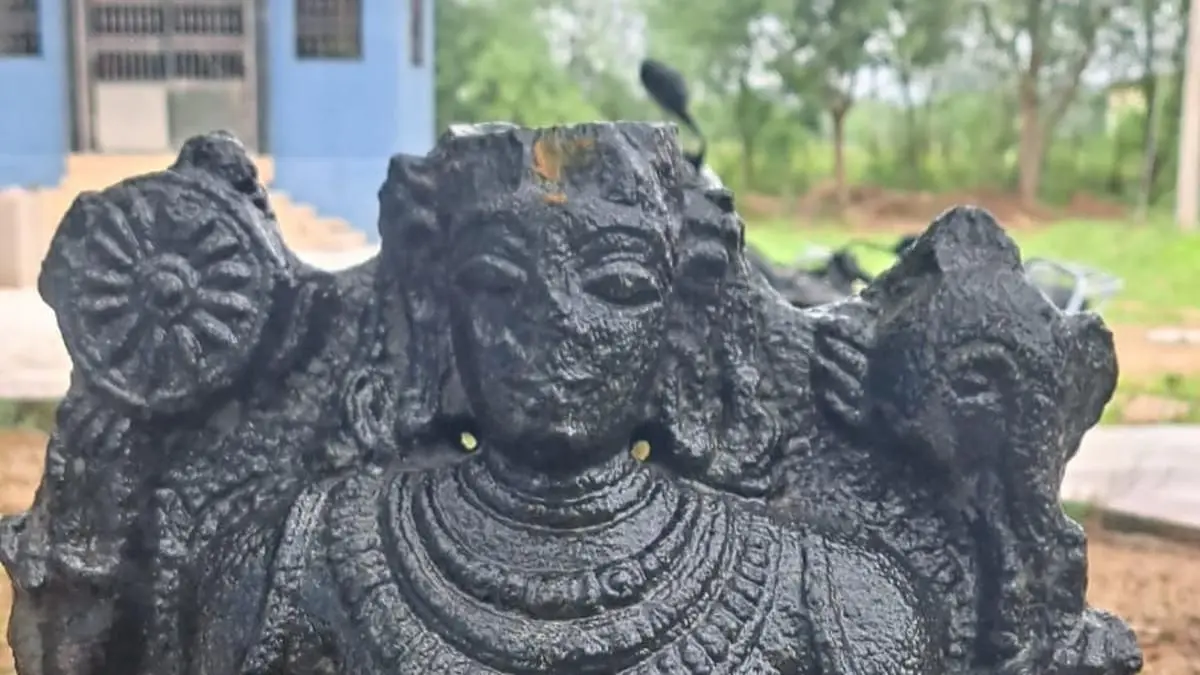
Residents of Puliyankannu village in Ranipet stumbled on a stone Vishnu idol while walking on the dry Palar riverbed on Saturday. The idol, two feet tall and 1.5 feet wide, is slightly…
The Story in Brief
Residents of Puliyankannu village in Ranipet stumbled on a stone Vishnu idol while walking on the dry Palar riverbed on Saturday. The idol, two feet tall and 1.5 feet wide, is slightly damaged on the head but has its right arm with chakra intact. Local historians say it dates to the Vijayanagara era, about 500 years old, a period when the region saw many temple constructions.
Revenue officials invoked the Indian Treasure Trove Act 1878, which states anything buried below one foot belongs to the government. The idol has been moved to the Walajah Taluk Office. The Arcot Site Museum has requested Collector Priya Ravichandran to allow public display, citing educational value. The head of the idol is damaged, but two arms are intact.
The Indian Opinion
The discovery will inevitably be painted as either a grand revival of Hindu heritage or a bureaucratic steal by the state. Both miss the point. The idol is damaged; its real value is historical, not religious. The Treasury Act's one-foot rule is a colonial-era law, but officials have shown sensitivity by seeking museum display. The real test is whether the district collector permits public exhibition or lets it gather dust in a taluk office. Will Arcot Museum get this Vijayanagara-era piece for all to see?
Source: thehindu.com
This story was synthesised by AI from the source linked above.