
















Now Reading: AI cannot replace human oversight in judicial reasoning: Telangana CJ
-
01
AI cannot replace human oversight in judicial reasoning: Telangana CJ


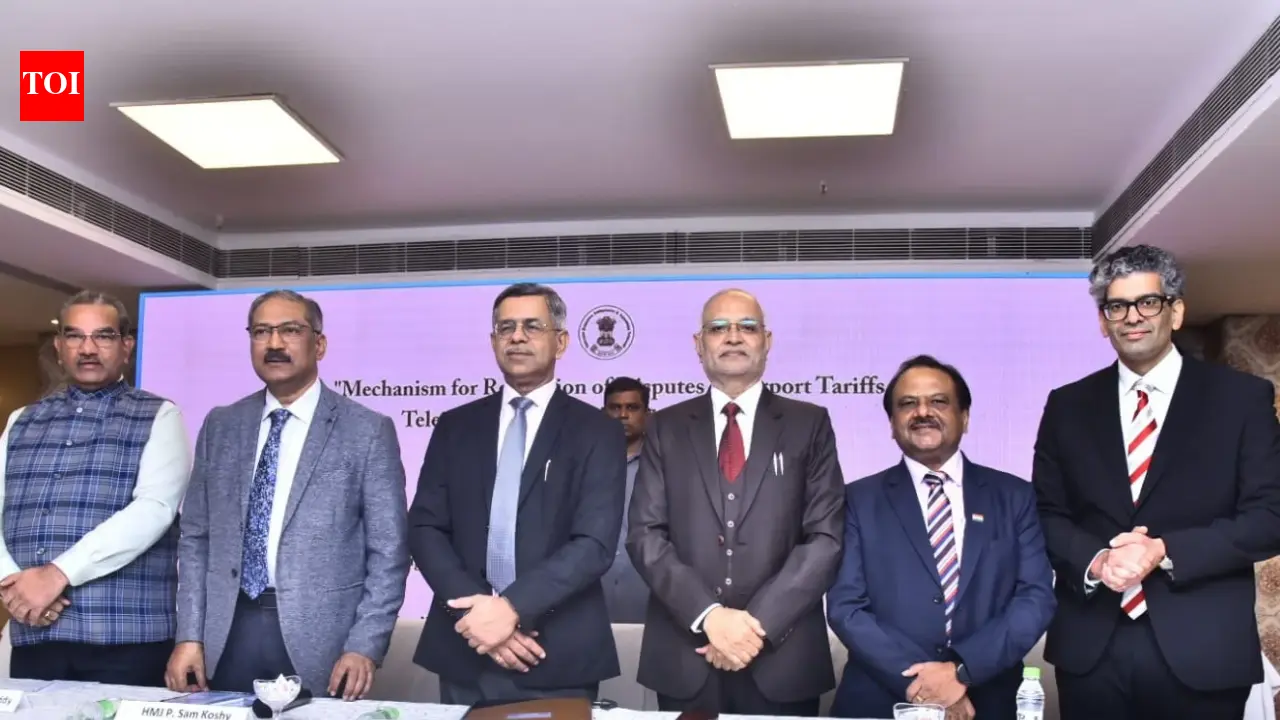
Telangana High Court Chief Justice Aparesh Kumar Singh said on Saturday that adjudicatory bodies must balance regulatory autonomy, specialised expertise and judicial accountability. He cautioned against allowing adjudication to substitute regulation or placing regulatory decisions beyond effective scrutiny. His remarks came at a seminar on dispute resolution mechanisms organised by the Telecom Disputes Settlement and Appellate Tribunal (TDSAT) in Hyderabad.
Justice Singh emphasised that timely disposal of disputes is crucial, as prolonged litigation can undermine regulatory objectives and create uncertainty for industry and consumers. Referring to the constitutional framework, he noted that judicial review by High Courts and the Supreme Court is part of the basic structure, and tribunals remain subject to constitutional judicial scrutiny. He also warned that while technology and artificial intelligence can assist adjudicatory processes, they cannot replace judicial reasoning, accountability and human oversight.
TDSAT Chairperson Justice D.N. Patel highlighted the tribunal's role in providing time-bound dispute resolution in telecom, broadcasting, airport tariff and cyber sectors. He noted that under the Information Technology Act, civil remedies for cyber disputes with compensation claims up to Rs 5 crore are initially adjudicated by a designated officer. Justice P. Sam Koshy and Advocate General A. Sudershan Reddy also addressed the seminar.
Indian Opinion Analysis
Both Times of India reports present the same event with near-identical framing, a neutral wire-style account of Justice Aparesh Kumar Singh's speech. No source adopts a government-critical or partisan stance. The coverage uniformly emphasises the Chief Justice's caution against substituting adjudication for regulation and his warning that AI cannot replace judicial reasoning. The middle ground is straightforward: the judiciary is asserting its constitutional role in specialised tribunals while acknowledging the need for efficient dispute resolution. Watch for further judicial pronouncements on the scope of tribunal powers in technology-driven sectors.
Coverage: 2 sources, 2 neutral
Sources (2): timesofindia.indiatimes.com (neutral report), timesofindia.indiatimes.com (2) (neutral report)
This story was synthesised by AI from the 2 sources linked above. Methodology and corrections.
Updated: this story now draws on 2 sources.