




















Now Reading: AI designed 16 functional viruses in Stanford study, biosecurity debate grows
-
01
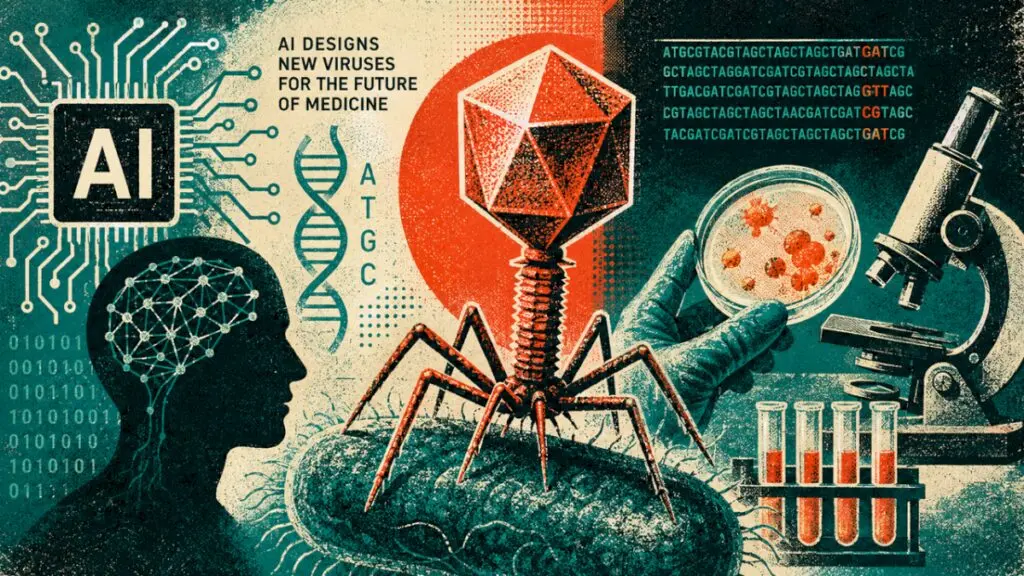
AI designed 16 functional viruses in Stanford study, biosecurity debate grows

AI designed 16 functional viruses in Stanford study, biosecurity debate grows


The Story in Brief
A study published in Science on 6 August by Stanford University and the Arc Institute shows that AI can design complete, functional viruses. Using genome language models Evo 1 and Evo 2, researchers generated thousands of phage genomes, 16 yielded viable bacteriophages that infect bacteria. Hindustan Times reports the work demonstrates AI’s ability to contribute to virus design, while Virology Blog notes only 16 of nearly 300 attempted genomes succeeded, underscoring the complexity of viral biology.
The study used phages that cannot infect humans. Virology Blog highlights the potential for phage therapy: the AI-generated phages killed bacteria resistant to the parent phage. Hindustan Times points to a separate October 2025 Science study that found AI-redesigned protein sequences could evade DNA screening software, though fixes were shipped before publication. Both sources agree robust safety frameworks are needed.
The Biological Weapons Convention, which bans such weapons without a verification mechanism, meets in Geneva from 7 to 11 December ahead of a 2027 review conference. India’s bioeconomy reached $195.3 billion in 2025, with a $300 billion target for 2030, and Hindustan Times frames biosecurity upkeep as an affordable service India could offer globally.
Indian Opinion Analysis
Hindustan Times frames the research as a biosecurity challenge, foregrounding gaps in DNA screening and the need for affordable safeguards, while Virology Blog emphasises the technical limitations of AI design (only 16 of 300 attempted genomes yielded viable phages) and the therapeutic promise for phage therapy. The newspaper omits the low success rate the blog highlights, and the blog omits Hindustan Times's specific cost data from OpenAI's lab work. Both agree the viruses cannot infect humans. A balanced reading notes the research is not yet a shortcut to dangerous pathogens, but the screening gap Hindustan Times reports is a concrete vulnerability that no single nation can close alone. The next step is the Biological Weapons Convention meeting in Geneva from 7 to 11 December.
Coverage: 2 sources, 2 neutral
Sources (2): hindustantimes.com (neutral report), virology.ws (neutral report)
This brief was synthesised by AI from the 2 sources linked above, so one read covers every framing they carry. Methodology and corrections.