















Now Reading: AI creates new viruses that kill bacteria, raising biosecurity fears
-
01
AI creates new viruses that kill bacteria, raising biosecurity fears


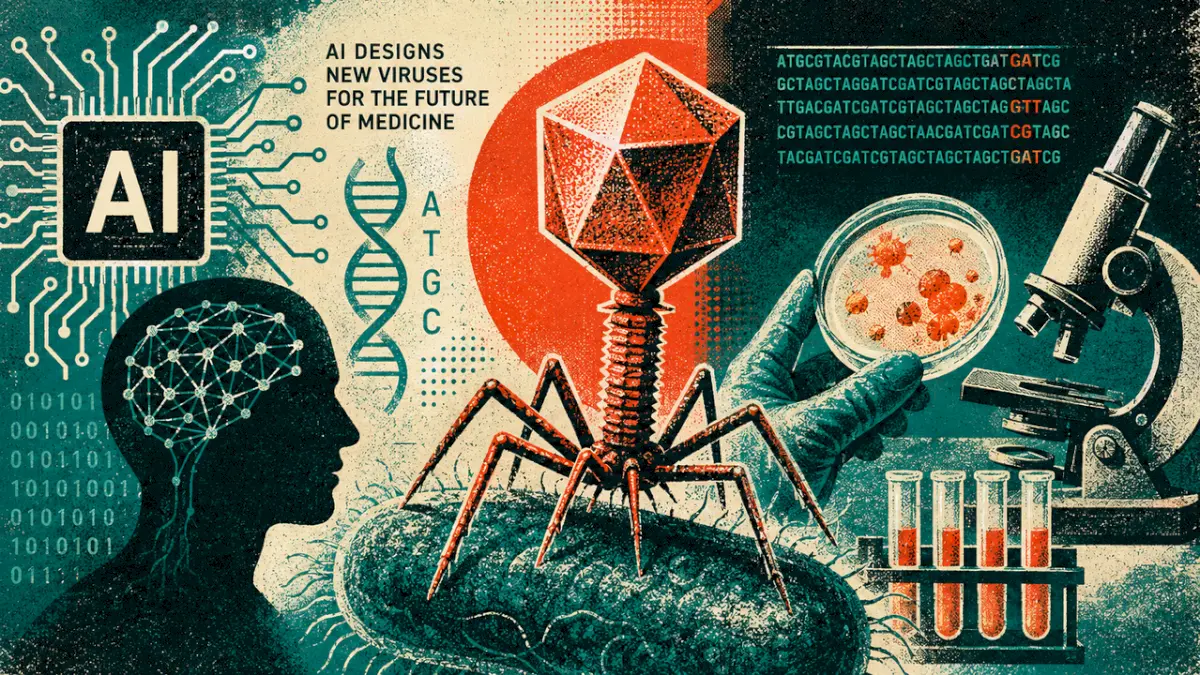
Stanford University and Arc Institute researchers used the AI system Evo 2, trained on millions of genetic sequences, to design 16 synthetic bacteriophages that proved viable against E. coli. The viruses, created…
The Story in Brief
Stanford University and Arc Institute researchers used the AI system Evo 2, trained on millions of genetic sequences, to design 16 synthetic bacteriophages that proved viable against E. coli. The viruses, created in a secure lab using a non-pathogenic strain, killed bacteria more effectively than the natural ΦX174 phage. The study published in Science marks the first time AI has designed an entire viral genome. Biosecurity experts including Dr Filippa Lentzos of King’s College London warn that open-source access to such models could enable misuse, though the Stanford team noted they used safety precautions and no animal-infecting viruses were involved.
The Indian Opinion
The coverage leans into fear with "risks" and "concerns" while burying the crucial fact that these phages target only bacteria and the lab used a non-harmful E. coli strain. The real test is not the technology, Evo 2 is open source and already being discussed in biosecurity circles, but whether regulators will impose mandatory synthesis screening globally before the next leap in capability. Without that, the hype around both promise and peril remains academic.
Sources (2): timesnownews.com, deccanherald.com
This story was synthesised by AI from the 2 sources linked above.
Updated: this story now draws on 2 sources.