













Now Reading: Amitabh Kant argues for India’s strategic autonomy doctrine
-
01
Amitabh Kant argues for India’s strategic autonomy doctrine


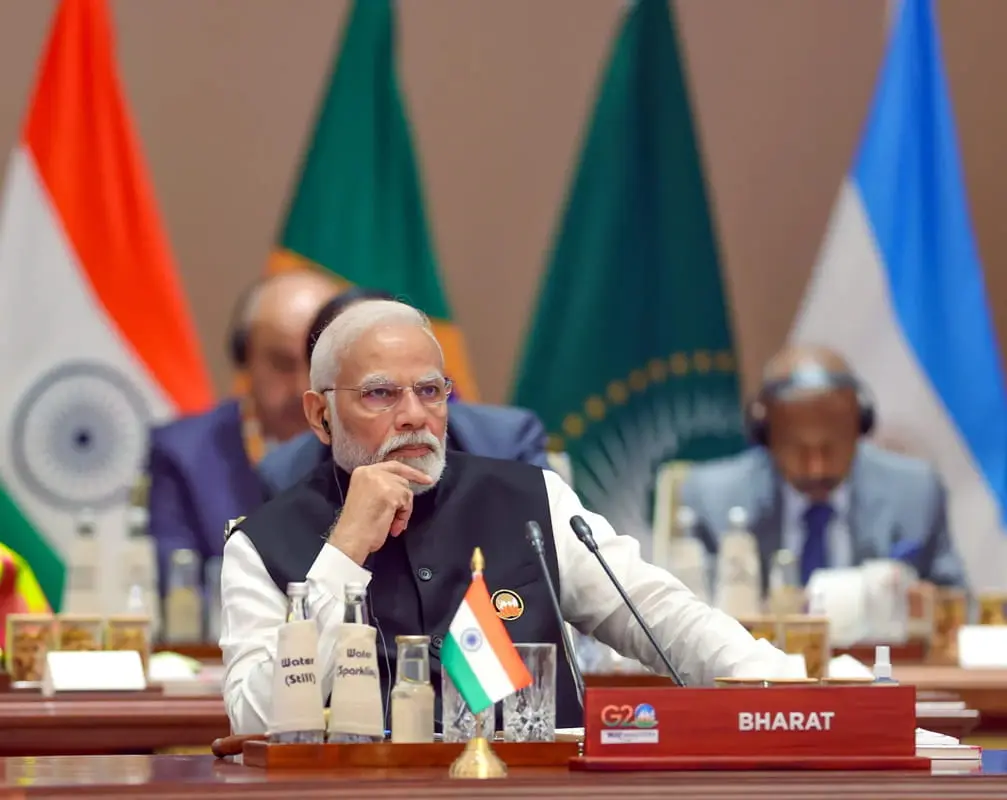
Amitabh Kant, Chairperson of the Fairfax Centre for Free Enterprise and former G20 Sherpa of India, has argued that India needs a doctrine of 'strategic autonomy' to navigate a world marked by deep uncertainty, fragmentation, and the fraying of old alliances. In a piece published by NatStrat, Kant contends that as the United States adopts an 'America First' stance and global governance institutions struggle with a 'polycrisis,' India must preserve its sovereign decision-making while pursuing ambitious economic and technological goals.
Kant outlines that strategic autonomy spans economic, technological, energy, and geopolitical domains. He warns that without building capacity in frontier technologies like AI, semiconductors, and quantum computing, India risks becoming a 'technological colony' of either the West or China. He also highlights energy autonomy as extending beyond oil to include solar cells, batteries, and critical minerals, noting that China dominates 80% of global critical minerals processing and solar cell manufacturing.
Indian Opinion Analysis
Kant's call for strategic autonomy revives a core tenet of India's foreign policy since the Non-Aligned Movement, but applies it to a new era of technological and supply chain rivalry. The piece is notable for its timing, coming as India balances deepening ties with the Quad and the West against its historical non-alignment and energy dependence on Russia. The practical test will be whether India can secure technology transfers and investment from both blocs without being forced to pick sides. Watch for India's stance at the next Quad summit or at WTO negotiations on critical minerals as signals of this doctrine in action.
Source: natstrat.org
This story was synthesised by AI from the source linked above. Methodology and corrections.