
















Now Reading: Arun Jaitley remembered for GST, IBC and economic reforms legacy
-
01
Arun Jaitley remembered for GST, IBC and economic reforms legacy


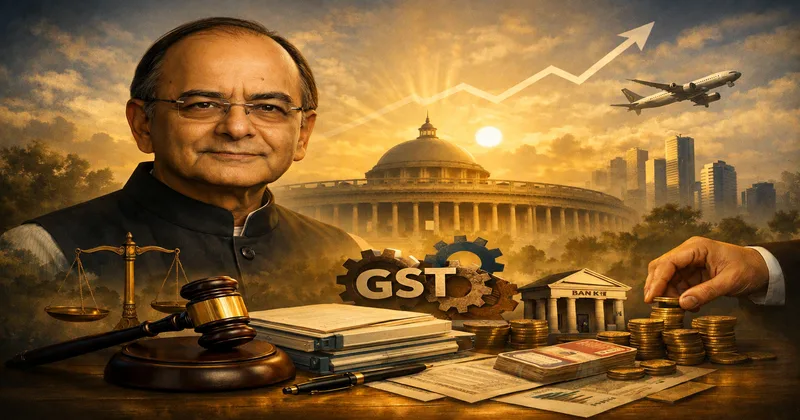
New Delhi: Former Union Finance Minister Arun Jaitley was remembered on his death anniversary on August 24, seven years after his passing at AIIMS aged 66. Both Organiser and Republicworld report his legacy in big-ticket economic reforms including the Goods and Services Tax and the Insolvency and Bankruptcy Code, as well as his role as the BJP's troubleshooter and a Supreme Court advocate.
Jaitley piloted the GST rollout through 32 council meetings taking over 900 decisions without a vote, and oversaw demonetisation of Rs 500 and Rs 1,000 notes in 2016. Republicworld notes his personal equation with Nitish Kumar helped stitch a JD-U-BJP Bihar government in 2017. Organiser lists banking reforms, corporate tax cuts and the Pradhan Mantri Jan Dhan Yojana among his contributions.
A student leader of the ABVP and president of Delhi University Students Union in 1974, he was detained for 19 months during the Emergency. He later held the portfolios of Finance, Law, Commerce and Defence under Atal Bihari Vajpayee and Narendra Modi, and was awarded the Padma Vibhushan posthumously in 2020.
Indian Opinion Analysis
Both sources frame the anniversary as a celebration of Jaitley's legacy, not a critical assessment. Organiser.org leads with his economic reform record under Modi and his pre-1999 party work, matching a pro-government framing. Republicworld.com, while also broadly celebratory, foregrounds his cross-party relationships and personal warmth, emphasising consensus-building on the GST Council. Neither source discusses policy downsides such as GST implementation glitches or demonetisation's GDP shock. The balanced reading is a tribute focused on legislative and strategic achievements, absent the economic costs that independent reporting would weigh. See if a cabinet note or economic survey on the IBC or GST's revenue buoyancy marks next month's quarterly data release.
Coverage: 2 sources, 2 pro-government
Sources (2): organiser.org (pro government), republicworld.com (pro government)
This story was synthesised by AI from the 2 sources linked above. Methodology and corrections.
Updated: this story now draws on 2 sources.