















Now Reading: Climate change to make Assam floods more frequent, intense: analysis
-
01
Climate change to make Assam floods more frequent, intense: analysis


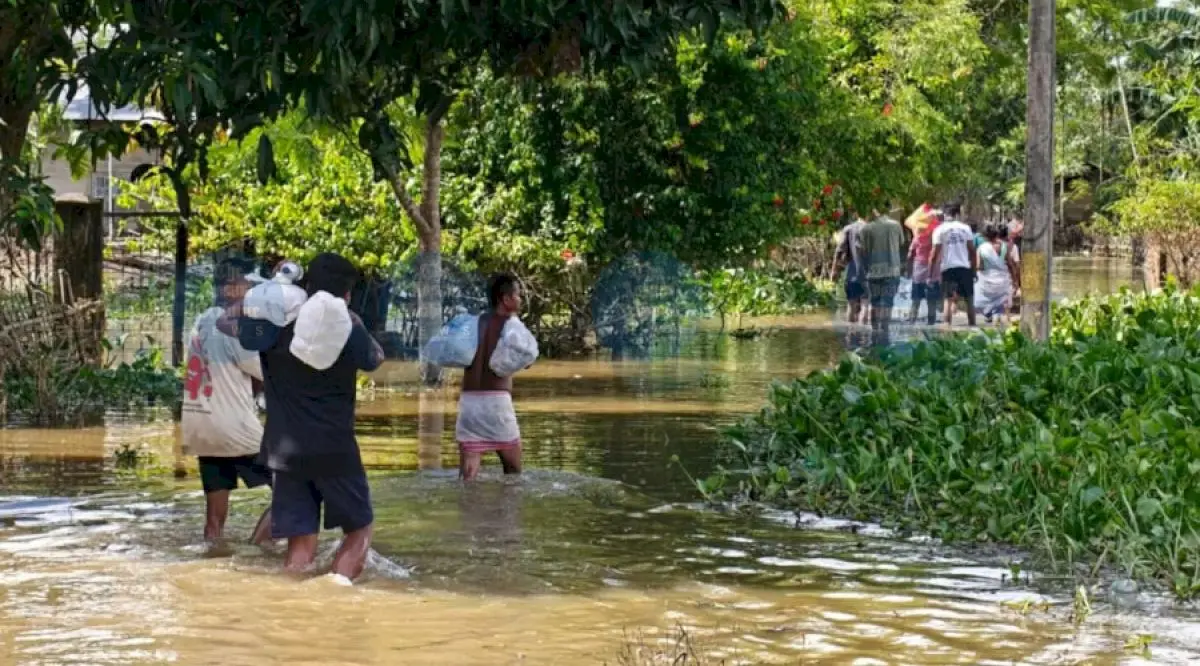
A climate analysis by Climate Trends warns that Assam will face more frequent and intense floods due to global warming. The study projects that extreme floods currently occurring once in 10 years…
The Story in Brief
A climate analysis by Climate Trends warns that Assam will face more frequent and intense floods due to global warming. The study projects that extreme floods currently occurring once in 10 years could recur every two years by 2080. The Brahmaputra's streamflow may rise 13-15% by mid-century, and sediment loads could surge nearly 40%.
Separately, the Hindustan Times reports that Assam's 2026 floods killed 100 people, with nearly 1.8 lakh still affected. The outlet argues for national calamity status, noting that floods have claimed 836 lives in the state over the past decade. The analysis attributes the worsening crisis to a mix of climate change, shifting river dynamics, and human factors like deforestation and urbanisation.
The Indian Opinion
The push to declare Assam's floods a national calamity is understandable, but annual relief alone will not solve the crisis. The narrative that climate change is solely to blame ignores the role of unplanned construction, deforestation, and the absence of a permanent Brahmaputra Basin Authority. The real question is whether the Centre and state can set up a statutory body with powers over basin-wide planning, sediment management, and flood forecasting, or will they continue to merely compensate after each disaster?
Sources (3): assamtribune.com, assamtribune.com (2), hindustantimes.com
This story was synthesised by AI from the 3 sources linked above.
Updated: this story now draws on 3 sources.