

















Now Reading: Bacteria found weakening sandstone at Unesco site Rani-ki-Vav
-
01
Bacteria found weakening sandstone at Unesco site Rani-ki-Vav


The Story in Brief
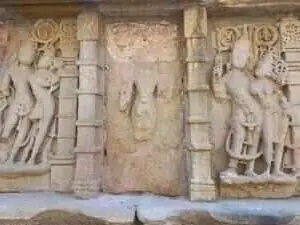
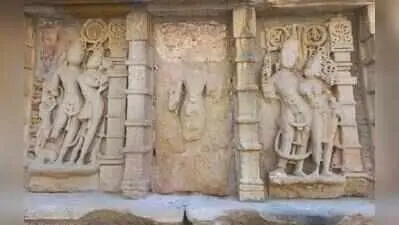
A new study published in Elsevier’s Journal of Cultural Heritage has found that bacteria living on the sandstone surfaces of Patan’s 11th-century stepwell Rani-ki-Vav are contributing to the monument’s deterioration through biological growth and chemical reactions. Researchers collected samples from 12 locations linked to erosion, identifying bacterial groups including firmicutes (61.5%), Bacteroidetes (18.5%), proteobacteria (18%) and actinobacteria (1.4%). The study detected metabolites and acids that can dissolve calcite, increase sandstone porosity and alter water seepage, processes that may progress without visible surface signs.
The research was conducted as part of Rachana Priyadarshi’s master’s dissertation at Krantiguru Shyamji Krishna Verma Kachchh University, Bhuj, with contributions from Hemchandracharya North Gujarat University, Gujarat Biotechnology Research Centre and the Archaeological Survey of India. The paper calls for expanding conservation toolkits beyond surface-level inspection, recommending long-term monitoring across seasons, particularly before and after the monsoon, to track fungal, algal and microbial communities and to limit moisture retention and mineral dissolution linked to microbial activity.
Indian Opinion Analysis
Times of India and Vibes of India both lead with the new research on microbial deterioration at Rani-ki-Vav, giving near-identical factual accounts of the study, its methods, findings, and recommendations. Times of India frames the story as a quiet, unseen risk to the monument and includes extensive detail on researchers’ calls for expanded conservation toolkits and long-term monitoring before and after the monsoon. Vibes of India adopts a more accessibility-driven tone, explaining biofilms and metabolites in simpler language for a general audience, and emphasizes that the threat is invisible and gradual. The uniform reporting across both outlets means no substantive stance conflict exists on the science, the difference is purely presentational, with Vibes of India choosing didactic explanation over the original paper’s technical framing. The study recommends seasonal monitoring, particularly before and after the monsoon, to track microbial communities, and a shift toward conservation strategies limiting moisture retention and mineral dissolution.
Coverage: 2 sources, 2 neutral
Sources (2): timesofindia.indiatimes.com (neutral report), vibesofindia.com (neutral report)
This brief was synthesised by AI from the 2 sources linked above, so one read covers every framing they carry. Methodology and corrections.