












Now Reading: India tells Bangladesh ties must be reciprocal amid strain over Hasina
-
01
India tells Bangladesh ties must be reciprocal amid strain over Hasina

India tells Bangladesh ties must be reciprocal amid strain over Hasina

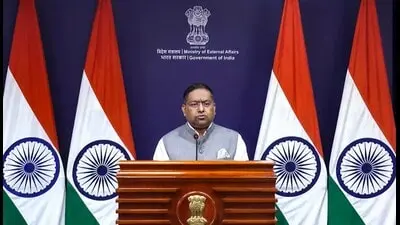
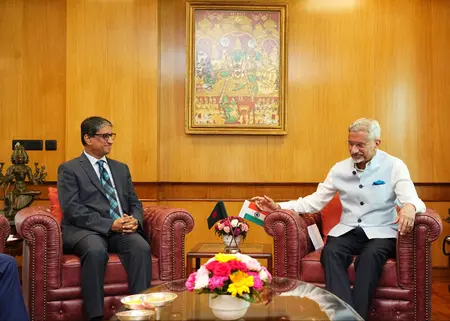
India has called for "mutuality of interest and reciprocity" in its ties with Bangladesh, as the prospect of a bilateral visit by Bangladesh Prime Minister Tarique Rahman remains uncertain. The statement came two days after Dhaka reiterated its demand for the extradition of former prime minister Sheikh Hasina, who has been living in India since fleeing Bangladesh in August 2024.
ThePrint reports that political sources in Dhaka said Rahman's government wants better relations with India but believes New Delhi must make a substantive political gesture, possibly a visit by Prime Minister Narendra Modi to Dhaka. ThePrint adds that the unresolved issue of Sheikh Hasina's political activities from Indian soil has become a major irritant, with Bangladesh saying a "propitious environment" is needed for Rahman's visit.
The Hindustan Times reports that India's external affairs ministry spokesperson Randhir Jaiswal said the extradition requests are being examined under established processes. Telangana Today notes that India is also examining Bangladesh's request for additional fuel supplies to help with an acute energy crisis. Rahman is also expected to skip the BRICS summit in New Delhi in September, with Bangladesh likely to send another representative.
Indian Opinion Analysis
The three sources all report the same core facts, India's reciprocity statement, the stalled visit, and the Hasina extradition demand, but frame them differently. ThePrint leads with Dhaka's view, quoting anonymous sources who portray India as needing to "walk the talk" and make the first move, including a possible Modi visit. Hindustan Times foregrounds India's formal diplomatic language of reciprocity, treating the statement as a significant shift, and also mentions counterterrorism and Teesta water sharing, broadening the context. Telangana Today gives the most neutral, wire-like account, listing India's stated positions without the same emphasis on the stalemate. The key gap is that none of the sources independently verify the exact status of any behind-the-scenes diplomatic communication, the story rests heavily on unattributed political sources from Dhaka in ThePrint. Readers should note that the "reciprocity" formulation from India is a clear signal that New Delhi will not yield to public conditions, but also that the energy crisis gives Bangladesh an incentive to keep channels open. Watch for whether India grants the additional fuel request, which would be a concrete test of whether reciprocity is being applied flexibly.
Coverage: 3 sources, 1 government-critical, 2 neutral
Sources (3): theprint.in (government critical), hindustantimes.com (neutral report), telanganatoday.com (neutral report)
This story was synthesised by AI from the 3 sources linked above. Methodology and corrections.
Updated: this story now draws on 3 sources.