



















Now Reading: Bhagavad Gita discussion explores Karna portrayal, Krishna’s skin colour
-
01
Bhagavad Gita discussion explores Karna portrayal, Krishna’s skin colour

Bhagavad Gita discussion explores Karna portrayal, Krishna’s skin colour

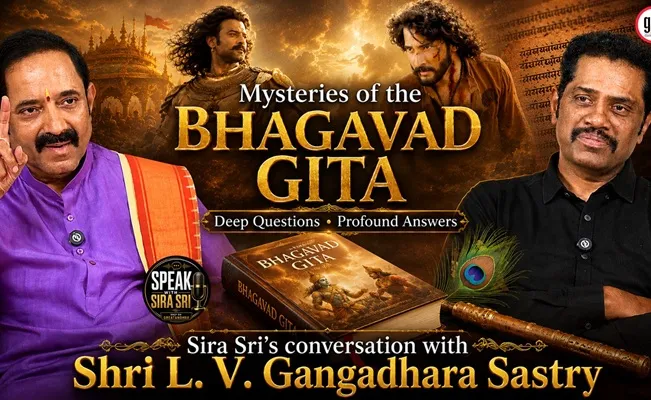
A conversation between Sira Sri and Shri L. V. Gangadhara Sastry has examined the Bhagavad Gita's relevance to modern life, touching on topics including social media, distraction, and responsibility. The discussion also ventured into controversial territory, questioning the portrayal of Karna in Nag Ashwin's film Kalki 2898 AD, the Ramayana timeline's reference to Varanasi, and whether Lord Krishna was actually blue.
The interview questioned why idols of Radha-Krishna are common but not Rukmini-Krishna. It explored how mythology is interpreted, how popular culture reshapes familiar characters, and how much of what is assumed about India's spiritual traditions comes from original texts versus later representations. The conversation returned to the Gita's core ideas of Dharma, Karma, faith, reason, and social responsibility.
Indian Opinion Analysis
The questions raised touch on a long-running tension in Hindu iconography and film: Krishna's blue skin is a poetic convention in most traditions, not a literal description found in every early text. The Radha versus Rukmini idol debate reflects regional and sectarian worship patterns, Radha is central to Gaudiya Vaishnavism, while Rukmini is prominent in the Maharashtrian Warkari tradition. Karna's portrayal in Kalki 2898 AD follows a recent trend in Indian cinema that reimagines Mahabharata characters as morally complex. None of these questions have settled answers in scholarship, which is what keeps the conversation open for the next film or festival.
Source: greatandhra.com
This brief was synthesised by AI from the source linked above. Methodology and corrections.