















Now Reading: Astronomers discover ‘black hole star’ in early universe
-
01
Astronomers discover ‘black hole star’ in early universe



Astronomers using the James Webb Space Telescope have identified a new cosmic object called a 'black hole star', potentially solving the mystery of the 'little red dots' seen in the early universe.…
The Story in Brief
Astronomers using the James Webb Space Telescope have identified a new cosmic object called a 'black hole star', potentially solving the mystery of the 'little red dots' seen in the early universe. The object, named MoM-BH-1, existed about 660 million years after the Big Bang and looks like a star the size of our solar system but emits 100 billion times more energy than the Sun.
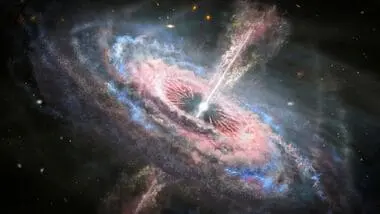
The study, published in Nature, was led by Rohan Naidu of the University of Hawaii. The team initially studied why some galaxies became so bright so early. Computer modelling suggested the object is powered by a black hole surrounded by a thick gas cocoon, making it appear as a giant star. The red colour, researchers found, is due to hydrogen gas rather than dust.
The Indian Opinion
The 'black hole star' discovery is a reminder that the early universe still holds surprises that can overturn easy assumptions. The popular narrative that the James Webb Telescope has 'broken' cosmology is overblown; this finding actually refines our understanding of how matter behaved shortly after the Big Bang. The real test will be whether these objects are common or rare. How many more MoM-BH-1s will the telescope find?
Sources (2): livemint.com, ndtv.com
This story was synthesised by AI from the 2 sources linked above.
Updated: this story now draws on 2 sources.