















Now Reading: Broccoli compound may help treat corneal disorder
-
01
Broccoli compound may help treat corneal disorder



Times of India reports that researchers from LVPEI and NYU Grossman School of Medicine have found that sulforaphane, a compound in broccoli and other cruciferous vegetables, activates the NRF2 protein, helping corneal…
The Story in Brief
Times of India reports that researchers from LVPEI and NYU Grossman School of Medicine have found that sulforaphane, a compound in broccoli and other cruciferous vegetables, activates the NRF2 protein, helping corneal cells fight oxidative stress. The study, published in IOVS, analysed tear samples from 57 keratoconus patients and 34 healthy individuals, finding higher oxidative stress markers in patients and that 87.8% had the condition in both eyes, with a higher prevalence in males.
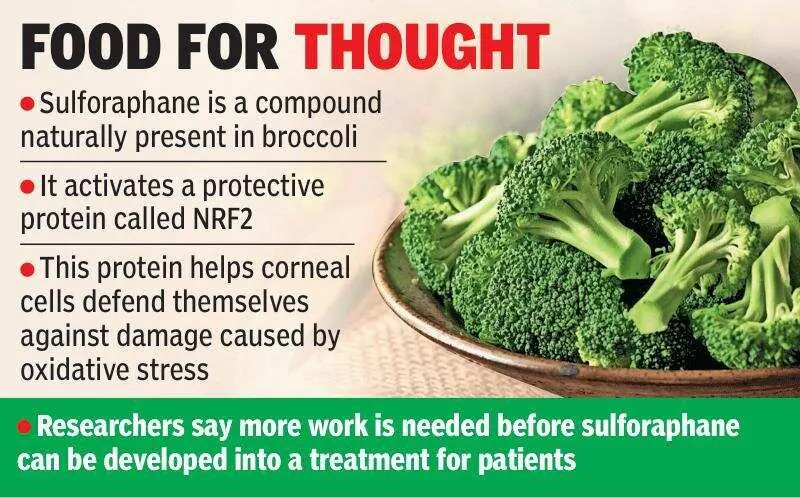
The researchers stress that much more work is needed before sulforaphane can become a treatment. Keratoconus is a progressive eye disease that thins and bulges the cornea, often requiring a corneal transplant in severe cases. Lab tests showed that sulforaphane reduced cellular damage, but blocking NRF2 in healthy cells led to changes similar to keratoconus.
The Indian Opinion
This early research is promising but far from a treatment. Broccoli will not cure eye disease any time soon, and headlines suggesting otherwise are misleading. The study shows a mechanism in lab-grown cells, not in human eyes. The real test will be whether sulforaphane can be safely delivered to the cornea in effective doses in clinical trials. Until then, eating more greens is no substitute for seeing an ophthalmologist.
Source: timesofindia.indiatimes.com
This story was synthesised by AI from the source linked above.