







Now Reading: Cabinet raises wheat MSP by Rs 25 to Rs 2,610 per quintal
-
01
Cabinet raises wheat MSP by Rs 25 to Rs 2,610 per quintal


The Story in Brief
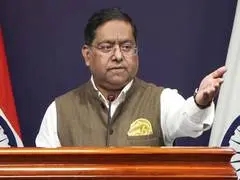
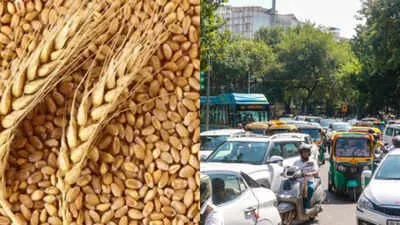
The Union Cabinet on Wednesday, 30 September 2026, approved a Rs 25 per quintal increase in the minimum support price (MSP) of wheat to Rs 2,610 per quintal for the 2027-28 rabi marketing year, I&B Minister Ashwini Vaishnaw announced. The MSP for the 2026-27 marketing year was Rs 2,585 per quintal. The government said the production cost of wheat is Rs 1,264 per quintal, making the new MSP more than double that cost, providing a 106% margin.
The Cabinet also raised MSPs for five other rabi crops: barley to Rs 2,286, gram to Rs 5,958, masur to Rs 7,390, rapeseed/mustard to Rs 6,613 and safflower to Rs 7,215 per quintal. Safflower received the highest absolute increase of Rs 675 per quintal. The total estimated payout to farmers is Rs 90,962 crore for 324 lakh tonnes in the 2027-28 marketing year. The revised MSPs are based on CACP recommendations. Sowing of wheat, the main rabi crop, usually begins in October 2026.
Update, 1 October 2026: ABP Live reports that PM Narendra Modi welcomed the Cabinet decision on X, saying the MSP hike will ensure farmers receive a remunerative price. ABP Live's report also adds that the Cabinet approved the Green Energy Corridor Phase-III scheme with an outlay of Rs 1.86 lakh crore.
Indian Opinion Analysis
Coverage is largely uniform straight reporting, with most outlets carrying the PTI wire or near-identical versions of the Cabinet announcement and Vaishnaw's briefing. NDTV Profit notes the move could create tailwinds for food inflation, a detail most others omit. Times Now and Hindustan Times add context on the sharp slowdown from last year's Rs 160 wheat hike and elevated government stocks, framing the modest increase as deliberate policy. Livemint and the Economic Times report the total value of three Cabinet decisions at Rs 2.79 lakh crore, bundling the MSP payout with the green corridor and Delhi traffic scheme. ABP Live carries PM Modi's welcome post. No outlet questions the 106% margin claim or the cost-of-production figure. The uniform coverage leaves no significant framing conflict, the differences are in which additional decisions each outlet bundles.
Coverage: 17 sources, 17 neutral
Sources (17): ndtvprofit.com (neutral report), thehindu.com (neutral report), indiatvnews.com (neutral report), deccanherald.com (neutral report), timesofindia.indiatimes.com (neutral report), thehindubusinessline.com (neutral report), timesnownews.com (neutral report), thefederal.com (neutral report), ndtv.com (neutral report), hindustantimes.com (neutral report), thehindu.com (2) (neutral report), livemint.com (neutral report), economictimes.indiatimes.com (neutral report), businesstoday.in (neutral report), thehindubusinessline.com (2) (neutral report), livemint.com (2) (neutral report), abplive.com (neutral report)
This brief was synthesised by AI from the 17 sources linked above, so one read covers every framing they carry. Methodology and corrections.