


















Now Reading: CJI questions Delhi pollution steps, next hearing on Nov 16
-
01
CJI questions Delhi pollution steps, next hearing on Nov 16



Blindspot: every source we found covers this story from a pro-government position.
The Story in Brief
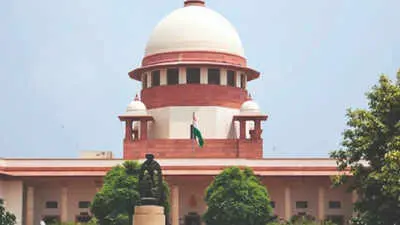
The Supreme Court on Friday, 6 November, took up the worsening air pollution in Delhi-NCR, with Chief Justice Suryakant questioning what steps authorities have taken. Amicus curiae Aparajita told the bench that Delhi's air quality poses a risk equivalent to smoking 30 cigarettes daily, with the AQI remaining in the 'severe' category.
The bench, also comprising Justices Joymalya Bagchi and V. Mohana, said merely imposing bans will not work and that public behaviour must change. It noted that vehicle emissions are the largest source of NCR pollution, with stubble burning contributing 14% on 5 November. The court suggested providing crop-residue machines to panchayats and pre-announcing purchase rates for stubble. The next hearing is scheduled for 16 November after Diwali.
Indian Opinion Analysis
Aajtak and TV9 Hindi frame the court as an activist monitor, with Aajtak leading on a vivid health-risk metaphor, '30 cigarettes a day', and TV9 stressing the bench's call for grass-roots remedies such as providing machinery to panchayats. Bhaskar takes a near-identical line but foregrounds the court's own scepticism about bans, quoting the CJI's remark that more orders will only increase violations. All three are uniform in reproducing the bench's view that enforcement alone is insufficient, none presents a counter-framing from any respondent or policy critic. The next hearing, on 16 November, is the only actionable date all sources carry.
Coverage: 3 sources, 3 pro-government
Sources (3): aajtak.in (pro government), bhaskar.com (pro government), tv9hindi.com (pro government)
This brief was synthesised by AI from the 3 sources linked above, so one read covers every framing they carry. Methodology and corrections.