













Now Reading: Corporate Laws Amendment Bill proposes easier compliance and buyback flexibility
-
01
Corporate Laws Amendment Bill proposes easier compliance and buyback flexibility

Corporate Laws Amendment Bill proposes easier compliance and buyback flexibility

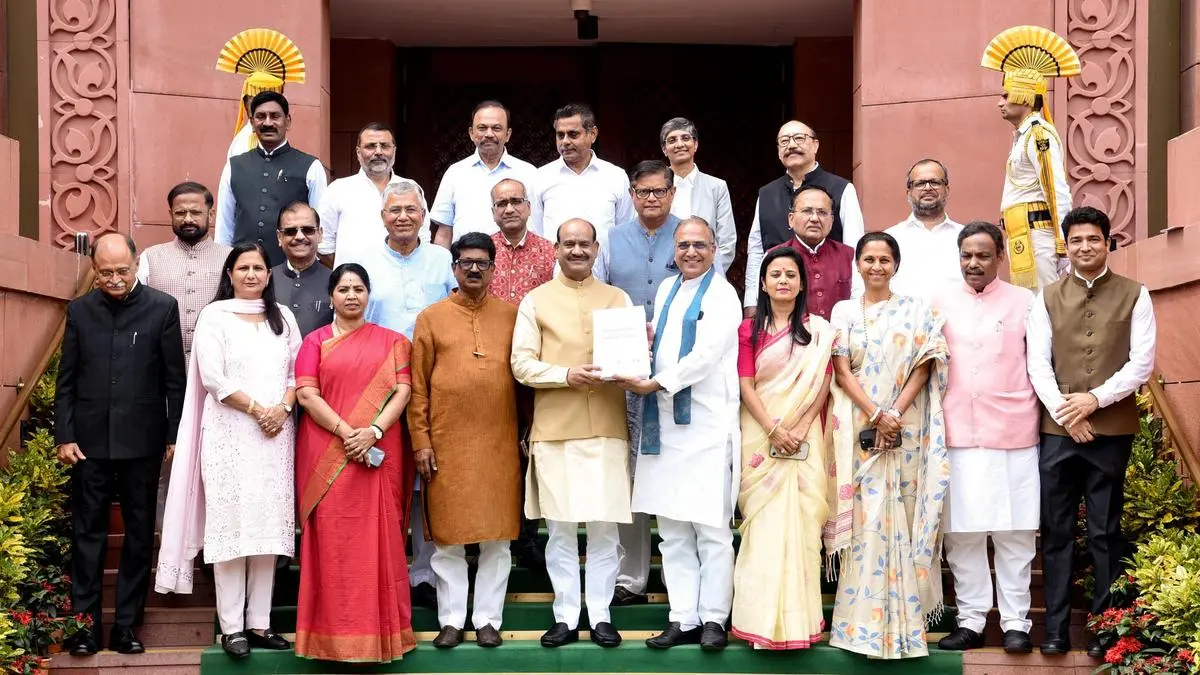
The Corporate Laws (Amendment) Bill, 2026, reported on after the Joint Committee submitted its report to the Lok Sabha Speaker, proposes to decriminalise several procedural defaults, permanently recognise hybrid shareholder meetings, and…
The Corporate Laws (Amendment) Bill, 2026, reported on after the Joint Committee submitted its report to the Lok Sabha Speaker, proposes to decriminalise several procedural defaults, permanently recognise hybrid shareholder meetings, and simplify tribunal applications for company restructuring, including allowing a single National Company Law Tribunal application for schemes involving multiple entities. It would let prescribed companies conduct up to two share buybacks a year with a six-month gap, alongside SEBI's recent restoration of the open-market buyback route under tighter rules. The Bill also introduces a consent settlement mechanism for penalty proceedings, gives statutory backing to the National Financial Reporting Authority with direct oversight of auditors, and lets GIFT City entities and some investment funds hold capital and accounts in foreign currency. Alay Razvi, Managing Partner at Accord Juris, said the changes to buybacks, audit oversight and compliance rationalisation were likely to have the greatest practical impact on listed companies and investors.

Indian Opinion Analysis
Alay Razvi's assessment that buyback, audit oversight and compliance rationalisation carry the greatest weight sits alongside Mohit Gogia's point that companies must still navigate SEBI's buyback and minimum public shareholding norms together, two lawyers reading the same bill differently. Whether the NFRA's expanded audit oversight actually overlaps with the Institute of Chartered Accountants of India in practice is a separate question neither quote resolves. Its passage through Parliament, following the Joint Committee's report, is the next step to watch.
Source: TheHinduBusinessLine
This brief was synthesised by AI from the source linked above.