







Now Reading: Deepak Dhar: Dirac medallist explains sandpile model and return to India
-
01
Deepak Dhar: Dirac medallist explains sandpile model and return to India

Deepak Dhar: Dirac medallist explains sandpile model and return to India


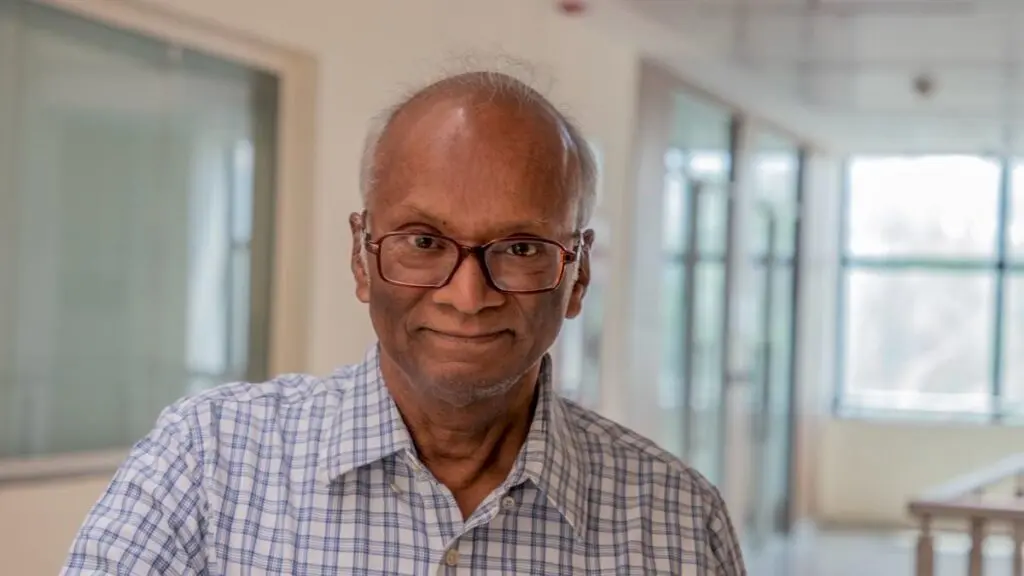
Theoretical physicist Deepak Dhar, a recent winner of the prestigious Dirac Medal, has spoken about his journey from studying under Richard Feynman at Caltech to working in India. In an interview, Dhar shared that he returned to India for a post-doctoral position at TIFR after failing to secure one in the US.
Dhar explained his work on the Abelian sandpile model, which shows how adding a single grain of sand to a pile can sometimes trigger nothing and at other times cause a large avalanche. His breakthrough was mathematically proving that addition operators in the model could predict this sporadic, burst-like behaviour, which had previously only been shown through computer simulations.
On the differences between PhD programmes in the US and India, Dhar said the best US universities are superior to the best in India, but several Indian institutes are comparable to institutions among the top 50 in the US. He credited his father's encouragement and a British science magazine for sparking his interest in science as a child.
Indian Opinion Analysis
Deepak Dhar's Dirac Medal win in 2023, shared with two others, recognises his foundational work on self-organised criticality, a concept that now underpins models from forest fires to stock-market crashes. His sandpile model, published in 1982, showed how complex systems can evolve to a critical state without external tuning, explaining why seemingly small triggers can cause disproportionate effects. This insight challenged the prevailing view that such phenomena required finely tuned parameters. Dhar's career path, working with Feynman, returning to India after a US rejection, and building a world-class research group at TIFR and IISER Pune, mirrors the challenges and choices many Indian scientists face. The real test of his legacy is whether Indian institutions will now invest more in theoretical physics, given that self-organised criticality has already influenced fields as diverse as ecology, neuroscience and economics.
Source: newindianexpress.com
This story was synthesised by AI from the source linked above. Methodology and corrections.