





















Now Reading: Delhi AQI crosses 300, GRAP Stage 2 enforced in NCR
-
01
Delhi AQI crosses 300, GRAP Stage 2 enforced in NCR


The Story in Brief
Delhi’s air quality index (AQI) crossed 300 on Monday, 2 November, prompting authorities to implement Stage 2 of the Graded Response Action Plan (GRAP) across the National Capital Region. The AQI rose to 324 by 4 pm, placing it in the ‘very poor’ category for the first time this season. Stage 1 restrictions had been imposed earlier.
Under GRAP Stage 2, agencies will intensify mechanical sweeping and dust suppression on roads. Parking fees for private vehicles will be increased to discourage use, and people are advised to work from home where possible. The restrictions do not include closing schools or colleges, mandating work from home in private offices, or banning BS-III petrol and BS-IV diesel cars.
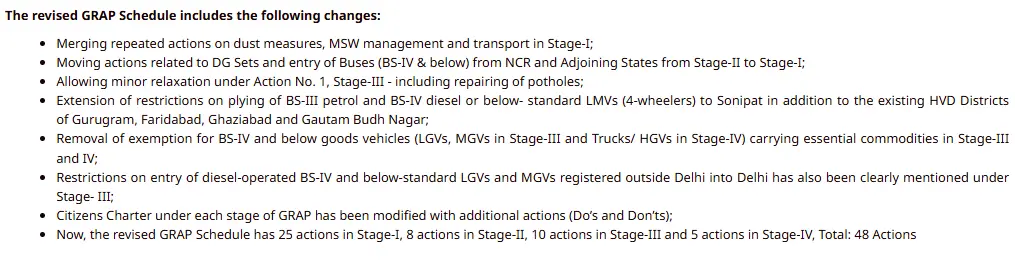
Some measures previously under Stage 2, such as restrictions on diesel generator sets and older inter-city buses, were merged into Stage 1 following a 28 September 2026 meeting of the Commission for Air Quality Management (CAQM).
Indian Opinion Analysis
The immediate impact falls on Delhi-NCR residents, who face higher parking fees and stepped-up enforcement of dust-control rules at construction sites. By merging older Stage 2 restrictions into Stage 1, CAQM has effectively pre-empted some of the usual tightening that would now be expected, making Stage 2 less disruptive than in previous years. The next trigger to watch is whether AQI worsens further, which would force the implementation of Stage 3, bringing bans on BS-III petrol and BS-IV diesel vehicles as well as a potential halt to construction activity.
Source: aajtak.in
This brief was synthesised by AI from the source linked above. Methodology and corrections.