


















Now Reading: Delhi Cabinet approves Rs 1,000 crore industrial policy
-
01
Delhi Cabinet approves Rs 1,000 crore industrial policy


The Story in Brief
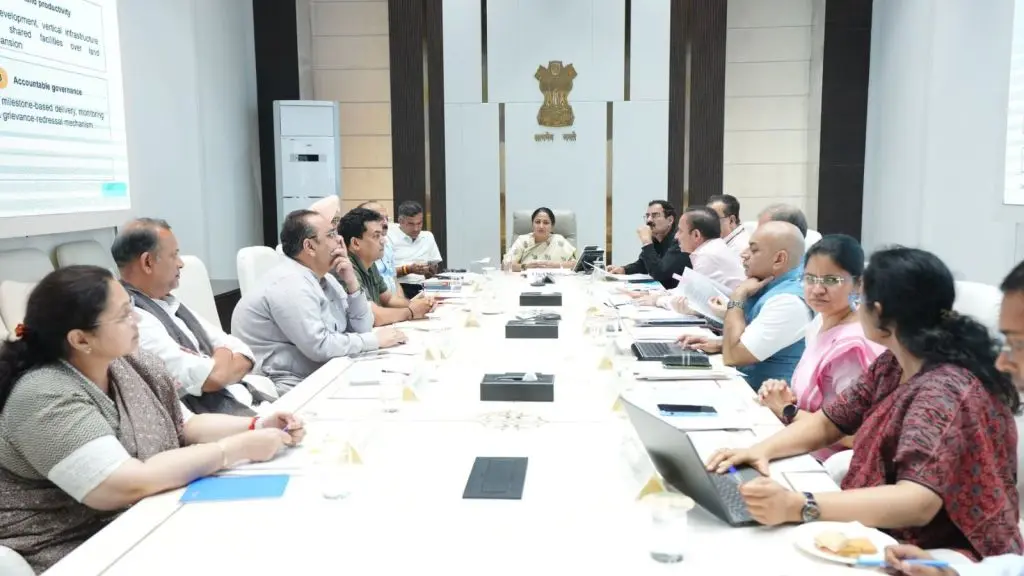
The Delhi Cabinet on Tuesday, 13 October 2026 approved the Delhi Industrial Policy 2026, a 10-year roadmap focusing on clean, technology-driven and knowledge-based sectors. The policy allocates Rs 1,000 crore under the Mukhyamantri Udyamshree Yojana from 2026-27 to 2030-31 to promote industrial development and create jobs, the government said.
Ten priority sectors have been identified, including IT, Global Capability Centres, data centres, healthcare, research and development, urban logistics, circular economy, precision manufacturing, skill development and MSME modernisation. Businesses will receive sector-specific incentives covering capital investment, office rentals, recruitment, research, certification and technological upgrades, with higher ceilings for women-led enterprises. For example, IT firms get digital infrastructure incentives of up to Rs 10 crore (Rs 12 crore for women), while Global Capability Centres have investment incentive ceilings of Rs 50 crore (Rs 60 crore for women-led units). Hospitals with 1,000 or more beds are eligible for assistance of up to Rs 100 crore.
Chief Minister Rekha Gupta said the policy aims to position Delhi as a hub for advanced technology and high-value industries while creating a more investment-friendly environment. Invest Delhi will function as a single point of contact for investors, and the government plans to redevelop industrial areas and modernise existing units.
Indian Opinion Analysis
The five sources uniformly report the Delhi Cabinet's approval of the industrial policy and the Rs 1,000-crore outlay. Indian Express and Business Standard lead on Wednesday, 14 October 2026 statements from Chief Minister Rekha Gupta, giving prominence to official framing of the policy as a step toward a ‘clean, modern’ economy. The Hindu leads with the Cabinet meeting date and the CMO statement, matching the official line. Times of India runs a different story focused on Haryana, not Delhi, so none of its facts are used. NDTV provides a concise headline and excerpt on healthcare incentives, confirming the higher ceiling for women-led enterprises. The coverage is uniform straight reporting with no critical framing, every outlet reproduces the government release. The implication is that the policy has no organised opposition or controversy at launch, the key watch item is the actual disbursal rate under the Mukhyamantri Udyamshree Yojana from FY2026-27 to 2030-31.
Coverage: 5 sources, 5 neutral
Sources (5): indianexpress.com (neutral report), thehindu.com (neutral report), timesofindia.indiatimes.com (neutral report), ndtv.com (neutral report), business-standard.com (neutral report)
This brief was synthesised by AI from the 5 sources linked above, so one read covers every framing they carry. Methodology and corrections.
Update, 16 October 2026: this story now draws on 5 sources.